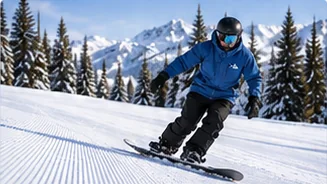
How to turn on a snowboard
Turn on each edge, change edges and link your first S-turns.
Beginner skills
Practice both edges
To stop on a snowboard, bring the board across the slope and press its uphill edge into the snow: lift your toes to brake on your heel edge, or press your shins forward to brake on your toe edge. Learn both, ideally with an instructor in a quiet beginner area.
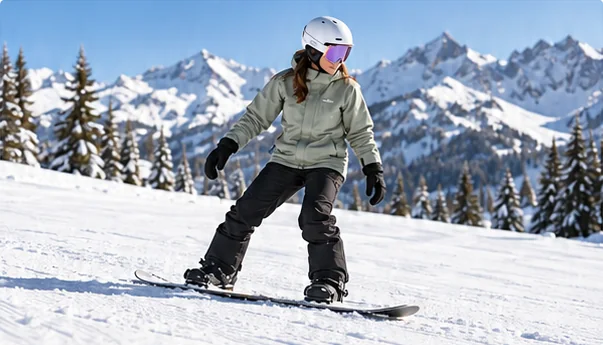
At a glance
Before this guide
Practice with an instructor in a suitable beginner area.
Stopping is the skill that makes everything else on a snowboard possible, which is why it sits at the center of our first-timer’s learning path. There is no brake to pull: you slow down and stop by tilting the board onto an edge across the slope. Before you work on it, choose a wide, gentle slope with plenty of space and a flat run-out at the bottom, so the terrain slows you down if you get it wrong. Many resorts have a marked beginner or learning area for exactly this.
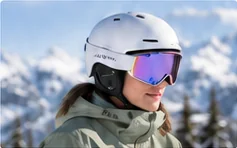
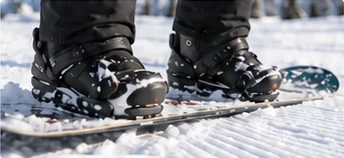
Check your equipment first. Both feet need to be strapped in for these exercises, your boots should be snug, and your helmet, goggles, gloves and clothing should suit the conditions. Take a moment to find a relaxed, balanced stance: knees and ankles flexed, back fairly upright, arms relaxed and your weight centered between your feet.
A qualified instructor is the fastest and safest way to learn this. They can see what your body is doing and correct it on the spot, which a written guide cannot do.
Practice controlled sideslips with your instructor. Learn to increase and release edge pressure gradually on suitable beginner terrain.
On your heel edge you face down the slope with the board across the hill. This is usually where beginners start, because you can see where you are going. The heel-side stop below, often just called a heel stop, is the braking move you will use most in your first days.
Keep your eyes up and ahead, not on your feet. Small, smooth changes in how much you lift your toes are what control your speed. Sudden movements tend to make the board skid or catch.
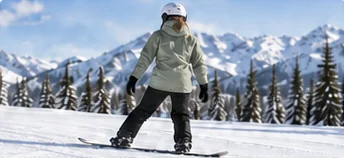
Work on the other edge with your instructor. Build balance and stopping control before progressing to turns.
On your toe edge you face up the slope, with your back to the bottom of the run. It feels less natural at first because you cannot see downhill as easily, so take it slowly and check the slope below you before you start.
Learning to stop on both edges matters because a turn always finishes on one of them. When you start turning on a snowboard, you will slow down and stop on whichever edge the turn ends on.
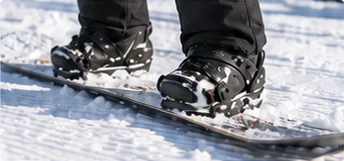
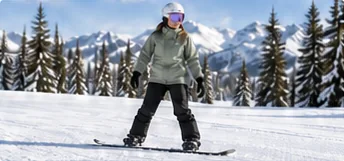
Stopping well is also about managing speed before you need to stop, and choosing a sensible place to do it.
Practice goals
Checking a box records your practice. Ask your instructor when you are ready to progress.
Common questions
With the board across the slope and you facing downhill, lift your toes gently so the heel edge bites. Lower them slightly to sideslip, then lift them again, gradually, to slow down and stop. Keep your knees bent and your hips over the board rather than sitting back.
You usually catch an edge when the downhill edge of the board digs into the snow. That happens when the board goes flat or tips the wrong way while it is sliding sideways. Keep gentle pressure on the uphill edge, stay flexed and keep your weight over the board.
Most beginners find the heel edge easier at first because they face downhill and can see where they are going. The toe edge takes more practice, but you need both edges to turn and stop in either direction.
Yes. Every turn finishes on either your heel edge or your toe edge, so you need to be able to slow down and stop on both.
Use the gentlest terrain available, ideally a beginner area with a flat run-out. Keep the board across the slope and practice short sideslips, stopping often. If you are gaining speed you cannot control, you are on terrain that is too steep for now.
You do not have to, but a qualified instructor will spot problems with your stance and balance straight away and choose the right terrain for you. Most people progress more safely with a lesson.
Up next
Turn on each edge, change edges and link your first S-turns.
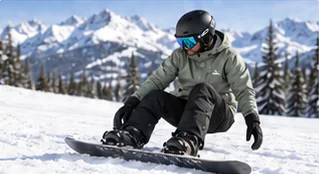
Fall more safely, learn your two edges and get up on either one.
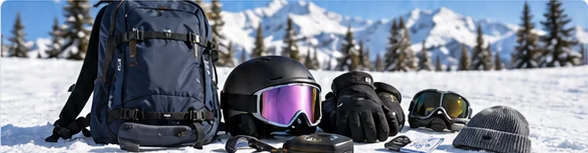
Everything you need to feel prepared for a great first day on snow.