How to find snowboard lessons
Find a good place to learn nearby and compare lessons before booking.
Beginner skills
Set realistic goals
How long it takes to learn to snowboard has no fixed answer: a first day usually covers the basics, while riding easy runs with confidence takes longer and varies a lot from person to person. Measure your progress in skills you can do, not in days on the calendar.
At a glance
Day one is about the fundamentals, not riding the whole mountain.
So, how long does it take to learn to snowboard? Honestly, nobody can give you a reliable number of days or hours. What you can plan for is the order in which the skills come, and what a realistic first day looks like.
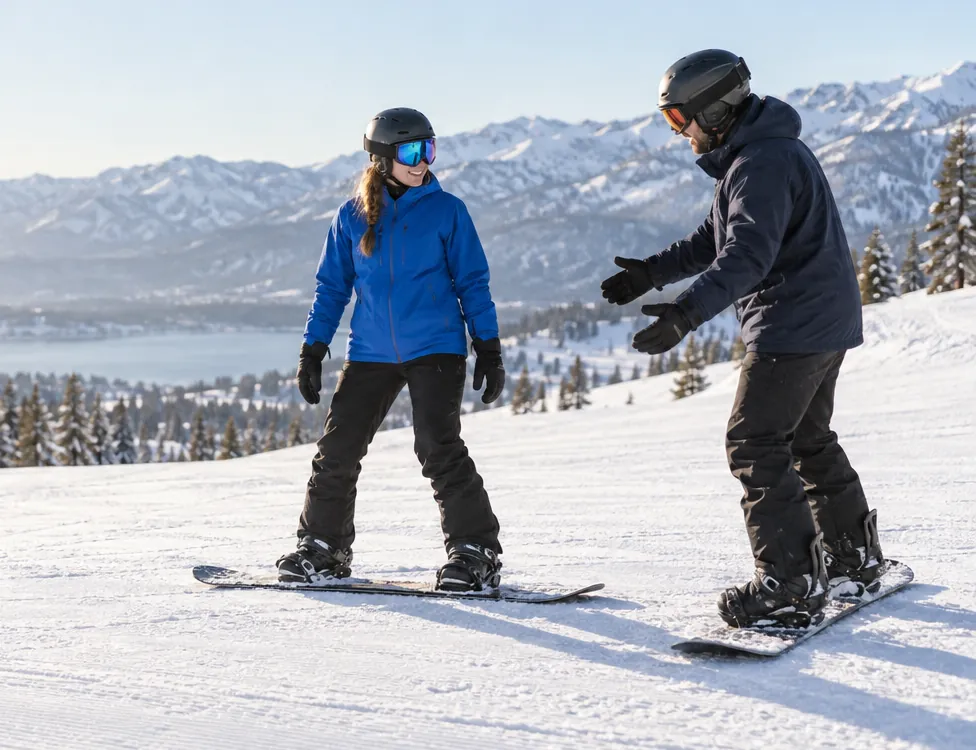
Can you learn to snowboard in one day? You can usually learn the basics in a day, especially with a lesson, but riding confidently takes longer. A typical first lesson focuses on fundamentals on gentle beginner terrain:
Expect to fall, to feel tired and to find one edge much harder than the other. That is normal. Many people find the first days feel slow and that things start to click once they can stop and change edges. When that happens is different for everyone.
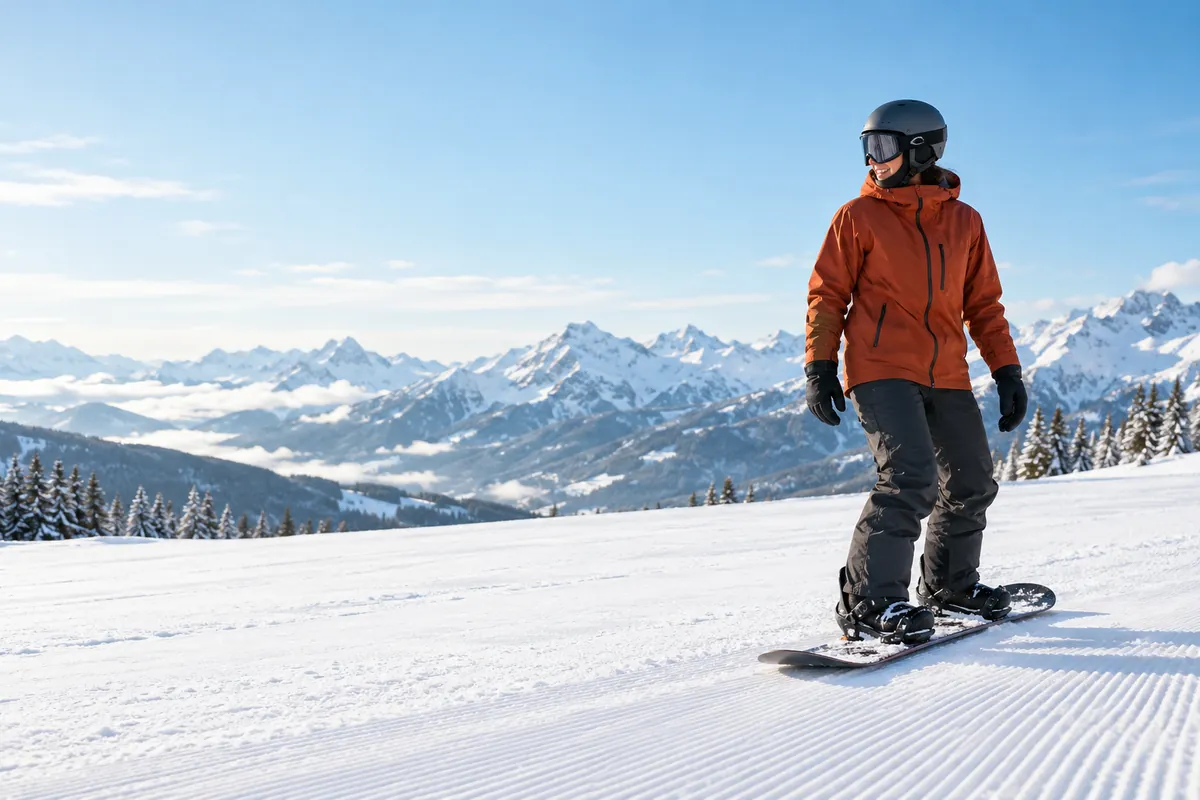
If you are still wondering whether to learn at all, or whether skiing would be easier, our honest look at how hard snowboarding is compared with skiing sets out what the first days feel like in each sport.
Some factors you control, and some you don’t.
How fast you can learn to snowboard depends far more on these factors than on any timetable:
| Factor | Usually helps | Usually slows you down |
|---|---|---|
| Instruction | A qualified instructor who picks the terrain and corrects mistakes as they happen | Learning alone or from a friend who isn’t a trained teacher |
| Time on snow | Several days close together | The same number of days spread over years |
| Terrain and snow | A quiet beginner area, soft groomed snow, good visibility | Ice, crowds, flat light, slopes that are too steep |
| Equipment | Boots that fit snugly and a board suited to beginners | Loose boots or a board that doesn’t suit your size |
| Energy | Rest, food, water and stopping before exhaustion | Pushing on when your legs are shaking |
| Confidence | Staying on terrain where you feel in control | Fear that makes you stiff and lean back |
Experience with skateboarding, surfing or other balance sports can give you a head start, but it isn’t required. For conditions, see choosing a good day to ride; for gear, our guides to boot fit and snowboard size explain what to check at the rental counter.
Track what you can do, not how many days you have ridden.
Rather than asking how many days it takes to learn to snowboard, work through milestones. Each builds on the one before, and they are also a practical way to know what level you are when a school asks.
Going from beginner to intermediate isn’t about a number of days. It means riding easy runs in control, in varied conditions. Resorts and ski schools describe levels in different ways, so ask how a school grades its lessons when you book.
Reading about a skill doesn’t make you ready for harder terrain. Move up only when you are comfortable and in control where you are, ideally when an instructor agrees.
Good instruction plus focused practice is the most reliable route.
There is no set number of lessons or hours. PSIA-AASI, the US instructors’ association, describes lessons as “the safer, faster, more efficient, and more fun way” to learn, and its beginner videos say plainly that they don’t replace an on-snow lesson. In practice, most people do best with a mix:
Ask your instructor at the end of each session what to practice and whether another lesson would help. If a friend or partner offers to teach you instead, read what informal help can and can’t do first. Parents can find age, gear and lesson advice in our guide to getting children started on a board.
There are no shortcuts, but there are smarter ways to spend your time on snow.
Wondering how to learn to snowboard quickly, or how to ride like a pro one day? Nobody can promise a timeline, but these habits help most riders improve steadily:
Pros got there through years of riding, coaching and practice, not a trick you can copy. If teaching eventually appeals to you, our guide to snowboard instructor certification shows how the formal pathways work.
Skills usually come back, but warm up on easy terrain first.
Can you forget how to snowboard? After a season or longer off you may feel rusty, but you are unlikely to be back at the very beginning. Many returning riders find their skills come back once they have warmed up.
Is it too late to learn? People start snowboarding at many ages. If you have health concerns, talk to a medical professional first, and tell your instructor about anything that affects your movement.
Practice goals
Checking a box records your practice, not a qualification. Ask your instructor when you are ready to progress.
In this series
Common questions
You can usually learn the basics in one day, such as strapping in, skating, getting up and perhaps stopping, especially with a lesson. Riding easy runs with confidence takes longer, and how much longer varies a lot from person to person.
There is no fixed number of lessons or hours. It depends on how often you ride, the conditions and how you learn. Ask your instructor at the end of each lesson what to practice and whether another lesson would help.
Use skills rather than days: can you stop on both edges, link turns with speed control, use lifts confidently and ride easy runs in varied conditions? Schools grade levels differently, so describe what you can do when you book.
People start snowboarding at many ages. If you have health concerns, check with a medical professional first, take lessons and stay on terrain where you feel in control.
You may feel rusty after time off, but many riders find their skills return once they warm up. Start on easy terrain and run through the basics before riding harder runs.
Up next
Find a good place to learn nearby and compare lessons before booking.
An honest look at snowboarding’s learning curve compared with skiing.
Everything you need to feel prepared for a great first day on snow.