Falling and getting up
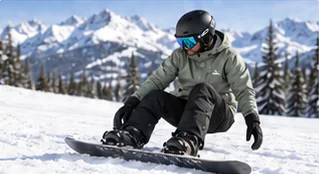
Fall more safely, learn your two edges and get up on either one.
Beginner skills
One foot strapped in
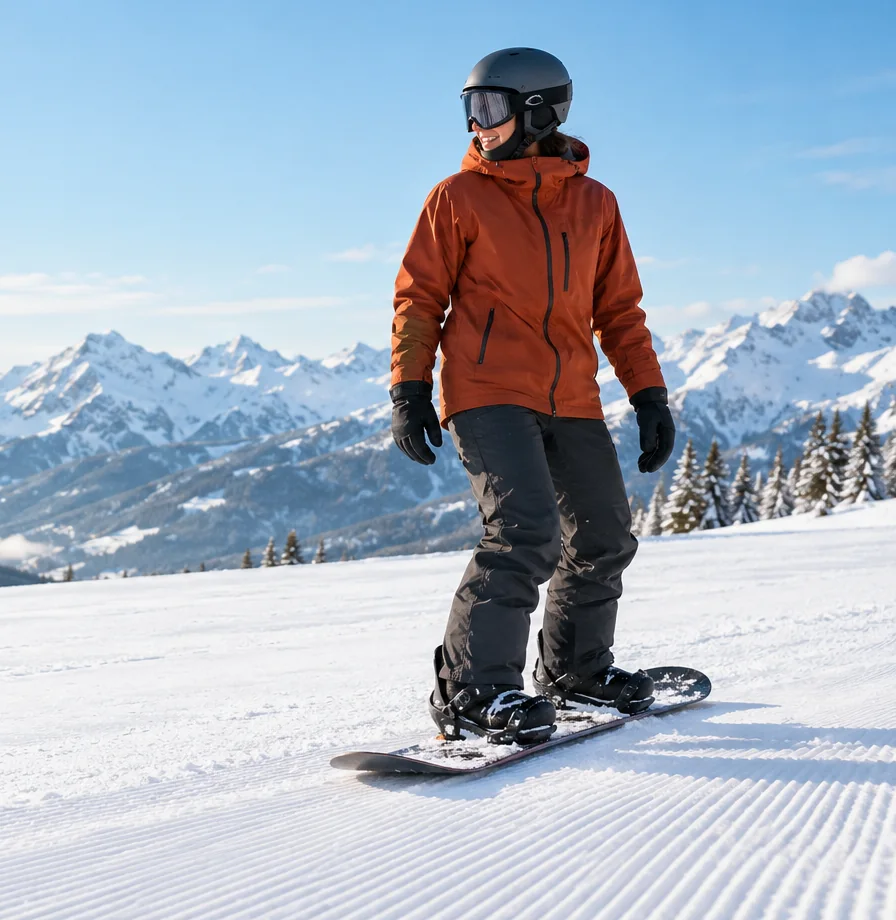
To walk with a snowboard, strap in your front foot only, keep your weight over it and push along with short steps from your free back foot, like riding a scooter. That skating move gets you across flats, through lift lines and around the beginner area.
At a glance
Before this guide
Strap in your front foot only and find some flat ground.
Walking with a snowboard really means skating: your front foot is strapped in, your back foot is free, and you push yourself along on the snow. It is how you move around the base area, shuffle forward in lift lines and get across flat sections, so it is worth practicing before you ride down anything. In our beginner progression it comes straight after strapping in.
With only one foot attached, the board can twist your front knee if it runs away from you. That is why we suggest keeping your pushes small and your speed low while you learn, and never riding anything steep with one foot out.
Short pushes from the back foot, weight over the front foot.
This “penguin walk” feels clumsy at first. That is normal. Practice moving forward a few steps at a time, then stop by putting your free foot down, and repeat until it feels natural.
Short uphill stretches are easier if you turn the board across the slope and side-step up, or simply unstrap. For longer walks, such as from the car park or lodge to the lift, take the board off and carry it; our guide to carrying your board and walking in boots covers that.
Push, place your back foot on the board and let it run straight.
A straight glide is the first time you ride the board with both feet on it. It teaches you how to go straight on a snowboard with a flat base, which you will use getting off lifts and crossing flat ground.
If the board keeps turning off to one side, you are probably tipping it slightly onto an edge or twisting your shoulders. To keep the board straight, level your weight between your toes and heels, keep your front shoulder pointing along the board and look at a spot ahead. If it speeds up more than you expect, move to flatter ground.
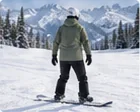
Keep the board flat, keep your speed and move over if you stop.
Cat tracks (the narrow paths that link runs) and flat sections are harder on a snowboard than on skis, because you cannot pole along. A few habits help:
Cat tracks can be busy and sometimes steeper than they look, so ask your instructor before using them, and follow the resort’s trail signs. The NSAA’s Your Responsibility Code asks you to always stay in control and to stop only where you are visible from above and do not restrict traffic, which matters most on narrow paths.
Skating well makes queues, loading and unloading much easier.
Most lift lines and loading areas are flat, and you usually ride lifts with only your front foot strapped in. That means the skills on this page are exactly what you need to reach the loading point and glide away at the top.
When skating feels comfortable, the next steps are learning to fall softly and stand up on each edge and to slow down and stop with control. After that, read our chairlift loading and unloading guide before your first ride.
Practice goals
Checking a box records your practice. Ask your instructor when you are ready to progress.
Ticks aren’t saved yet. to remember them in this browser.
Common questions
Strap in your front foot, keep your weight over it and push gently with your free back foot, taking small steps beside the board. Look ahead, not down, and stop by putting your free foot down.
Most beginners are taught to push from the toe side of the board, with the free foot near the front binding. Your instructor may have you try both sides.
Keep the board flat, with your weight centered and your shoulders and eyes pointing along the board. If the board veers off, you are usually tipping it onto an edge or twisting your upper body.
Only for short, gentle stretches such as gliding off a lift or across a flat, with your free foot resting on the board against the back binding or stomp pad. Anything steeper needs both feet strapped in, because a runaway board can twist your front knee.
Look ahead, ride a flat base so the edges do not slow you down and, when you are in control, avoid losing all your speed just before a flat. If you stop, move to the side where you are visible, release your back foot and skate.
Up next
Fall more safely, learn your two edges and get up on either one.
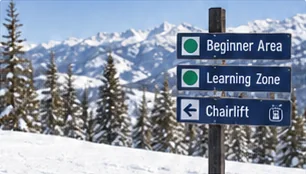
Load, ride and unload chairlifts and surface lifts on a snowboard.
Hold, carry and put down your board safely around other people.