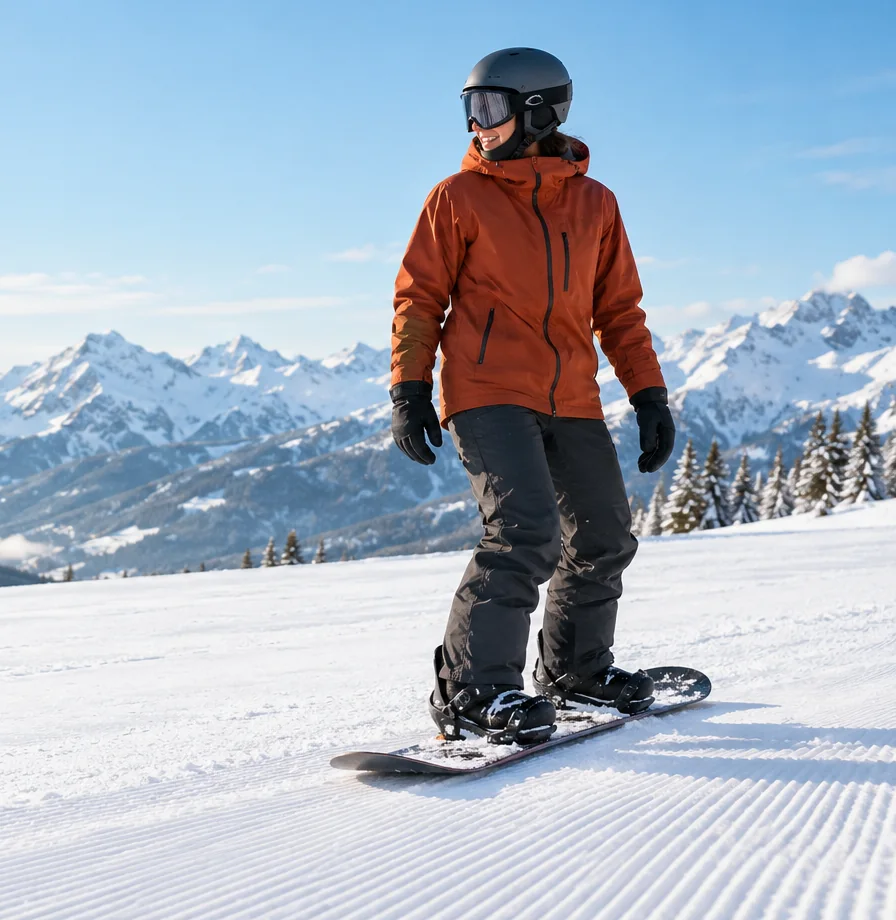
How to skate and glide on a snowboard
Push, skate and glide with one foot strapped in on flat ground.
Beginner skills
Chairlifts and T-bars
To get off a ski lift on a snowboard, point the board straight, rest your free back foot on the board against the back binding, stand up at the unload sign with your weight over your front foot and glide straight down the ramp before moving well clear. Loading and T-bars are covered below.
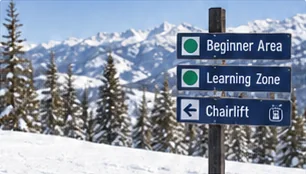
At a glance
Before this guide
Stand up at the unload sign, glide straight, then move well away.
Getting off the lift is the part most snowboarders worry about, so we cover it first. You will have practiced every move in it already if you can do a straight glide with one foot strapped in. Take it step by step:
If you fall, move off the ramp as quickly as you can, or stay down and let the attendant stop the lift if the next chair is close. If you do not manage to get off at all, stay seated and do not jump; signal to the lift staff, who can stop the lift.
Agree before the top which way each of you will go, so you do not glide into each other. We suggest each rider heads away on their own side of the ramp, but follow any signs or directions from the attendant. Stop only once you are clear of the unloading area, where the NSAA’s Your Responsibility Code says you should stop only where you are visible from above and do not restrict traffic.
Lift staff are used to helping beginners and can talk you through it.
Lifts are one of the milestones on our beginner learning path, and they come after you can stop and turn for a reason. Before your first ride, check that the lift goes to terrain you can ride down. Lifts are for getting to runs that suit your level; the trail map and signs at the base show where each one goes. If in doubt, ask.
The same code says you must know how, and be able, to load, ride and unload lifts safely, and to ask the lift attendant if you need help. Tell the attendant it is your first time on a snowboard. They can explain where to stand and what to expect, and may be able to slow the lift for you.
Lift rules differ between resorts and lift types, for example whether a board leash is required. Read the signs at the lift and follow the attendant’s instructions. If you are in a lesson, your instructor will usually take you on your first lift ride.
Getting your board from the car or lodge to the lift line is a separate job; see carrying a board and walking in boots.
Front foot in, back foot free, board pointing forward.
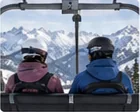
Sit still, stay aware and let dropped items fall.
You stay on the snow and are pulled up, so balance and patience matter most.
Surface lifts such as T-bars, button (platter) lifts and rope tows pull you uphill while your board stays on the snow. They are common in beginner areas, and they can be tricky on a snowboard at first.
Sharing a T-bar with a skier is common; Perisher notes the snowboarder usually faces the skier. If surface lifts feel too hard at first, ask the attendant or your instructor about alternatives in the beginner area.
Practice goals
Checking a box records your practice. Ask your instructor or lift staff whenever you are unsure.
Ticks aren’t saved yet. to remember them in this browser.
Common questions
Raise the bar when signed, point the board straight, put your back foot on the board against the back binding or stomp pad, stand up at the unload sign with your weight over your front foot, and glide straight down the ramp before stopping well clear of the exit.
Usually yes: most snowboarders ride with the front foot strapped in and the back foot free. Follow the resort’s signs and the attendant’s instructions, as rules differ.
With your front foot strapped in, take the bar as the attendant shows you, put your back foot on the board, stand rather than sit, and keep the board flat in the track. If you fall, let go and move out of the way.
Move off the ramp as quickly as you can so the next people can unload. If the next chair is close, stay low and let the attendant stop the lift.
Stay seated and do not jump. Signal to the lift staff, who can stop the lift and help you.
Up next
Push, skate and glide with one foot strapped in on flat ground.
Turn on each edge, change edges and link your first S-turns.
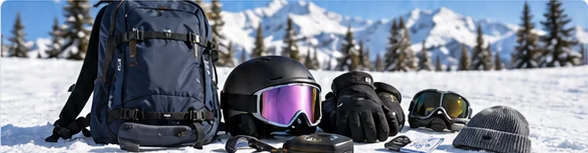
Everything you need to feel prepared for a great first day on snow.