Your first-day checklist
Everything you need to feel prepared for a great first day on snow.
Gear guide
Layer up, stay dry
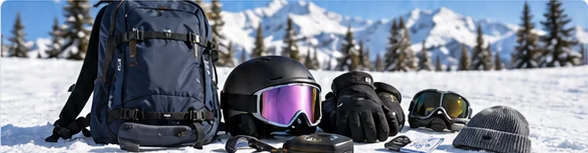
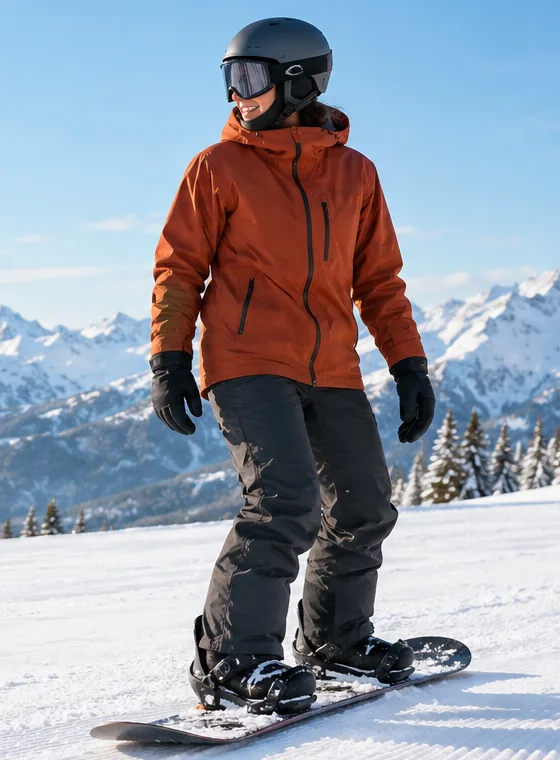
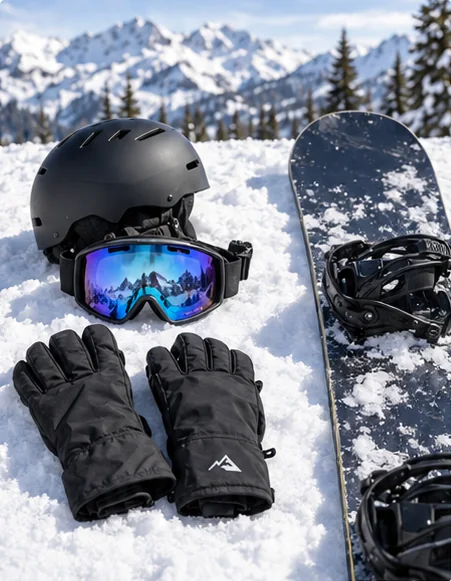
To dress for snowboarding, wear three layers: a base layer that wicks sweat (wool or synthetic, never cotton), a mid layer for warmth, and a waterproof jacket and pants on top. Add waterproof gloves or mittens, one pair of snowboard socks, a helmet and goggles.
At a glance
Layers let you adjust to the weather and to how hard you’re working.
Burton’s layering guide describes the three jobs: a base layer worn close to the skin wicks moisture away, a mid layer insulates, and the outer layer shields you from wind, precipitation and wear. Burton adds that the most effective systems rely on the mid layer, not the jacket, for most of the insulating warmth.
| Layer | Its job | What to look for |
|---|---|---|
| Base | Move sweat off your skin | Merino wool or synthetic; no cotton |
| Mid | Trap warmth | Fleece, synthetic or down; a front zip to vent |
| Shell | Block wind, snow and water | Waterproof, breathable jacket and pants or bib |
Burton’s base layer guide warns that cotton, once damp with sweat, “will suck warmth away from your body.” Choose sport-specific tops and leggings instead. Burton also says base layer fit doesn’t drastically affect performance, so close but comfortable is fine, and suggests starting with a midweight and adjusting warmth with your mid layer.
A fleece, a light synthetic jacket or a thin down jacket are common choices. On a mild spring day you may skip it; on a cold, windy day go thicker.
Your legs work all day, so they usually need less insulation. We suggest a base layer under your pants and a thin insulating layer only on very cold days.
Your shell takes a lot of contact with snow, especially while you’re learning.
When you buy a snowboard jacket or pants, check these points on the product page and label:
Keeping that waterproofing working depends on how you clean it; our guide to laundering outerwear without ruining the DWR covers detergent, drying and reproofing. For a small tear in snowboard pants, check the brand’s repair service or a repair patch suited to the fabric before the hole grows.
Learning on a budget? Some rental shops rent clothing too; see what renting gear involves and ways to cut costs.
Bib pants have a built-in upper with shoulder straps, like overalls. They stop snow getting in at the waist when you fall or sit in deep snow and stay up without a belt. Regular pants are easier to take off and cooler on warm days.
Your hands touch the snow every time you sit, strap in or stand up.
To measure your snowboard glove size, use the brand’s own chart. Methods differ (some measure around the palm, others the hand’s length), so measure the way that chart says. Try them on if you can: you should make a full fist without the fabric pulling across your knuckles, with a little room at the fingertips. Tight gloves restrict blood flow and make hands colder.
Wear one pair of long wool or synthetic snow socks that reach above the boot cuff, so nothing bunches where the boot closes. Two pairs or very thick socks usually backfire: extra bulk tightens the boot, reduces circulation and causes pressure points and cold toes. If your feet are cold or sore, the fix is usually boot fit, not more sock; see our boot sizing checks.
Riding involves crouching, twisting and reaching down to your bindings. Try your jacket and pants on over the layers you’ll wear and check that you can:
To size snowboard pants, use the maker’s chart for waist and inseam, then check the length with boots on: the hem should cover the boot top without dragging under your heel. Many snowboard pants are cut loose on purpose, but very baggy pants can catch on bindings or lifts.
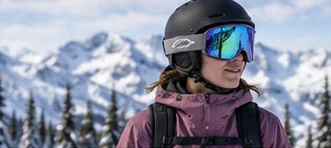
A helmet and goggles belong on the list, not as optional extras. Start with our guide to measuring your head and fitting a helmet, then pick lenses and a frame that seal with it using our advice on goggle fit and lens tints. Goggles fog less when they’re cared for properly; our tips on keeping lenses clean and fog-free explain what not to wipe.
Check the resort’s weather and snow report before you go, including wind, which makes exposed lifts feel much colder. Wet snow calls for your most waterproof layers; bright spring days may need only a base layer and shell with vents open. Our page on reading snow and weather conditions goes further. A thin neck gaiter helps on cold days, and sun protection matters on snow even when it’s cloudy.
For tickets, lessons and equipment too, use our day-one packing list.
In this series
Common questions
A wool or synthetic base layer, a warm mid layer, a waterproof jacket and pants, waterproof gloves or mittens, one pair of long snow socks, a helmet and goggles. Skip cotton and pick layers you can remove if you get warm.
You should be able to squat and bend your knees fully over your base layer without pulling, and the hem should cover the top of your boot without dragging under your heel. Use the maker’s waist and inseam chart, then check with boots on.
Over. Pull the pant leg over the outside of the boot and the inner gaiter down over the boot cuff to seal out snow.
Mittens are often warmer because your fingers share heat; gloves give more dexterity for straps and zips. Either works if it’s waterproof, fits without squeezing and seals with your jacket sleeve.
No. One pair of long wool or synthetic snow socks is best. Extra socks tighten the boot, reduce circulation and can leave your feet colder.
A bib keeps snow out at the waist and stays up on its own, which helps in deep snow and when you fall a lot. Regular pants are easier to take off and cooler on warm days.
Related guides
Everything you need to feel prepared for a great first day on snow.
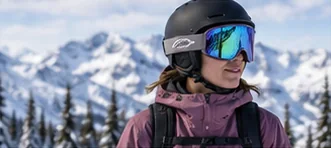
Fit goggles with your helmet, choose lenses and ride with glasses.
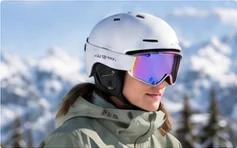
Measure, fit, adjust and replace a snowboard helmet.