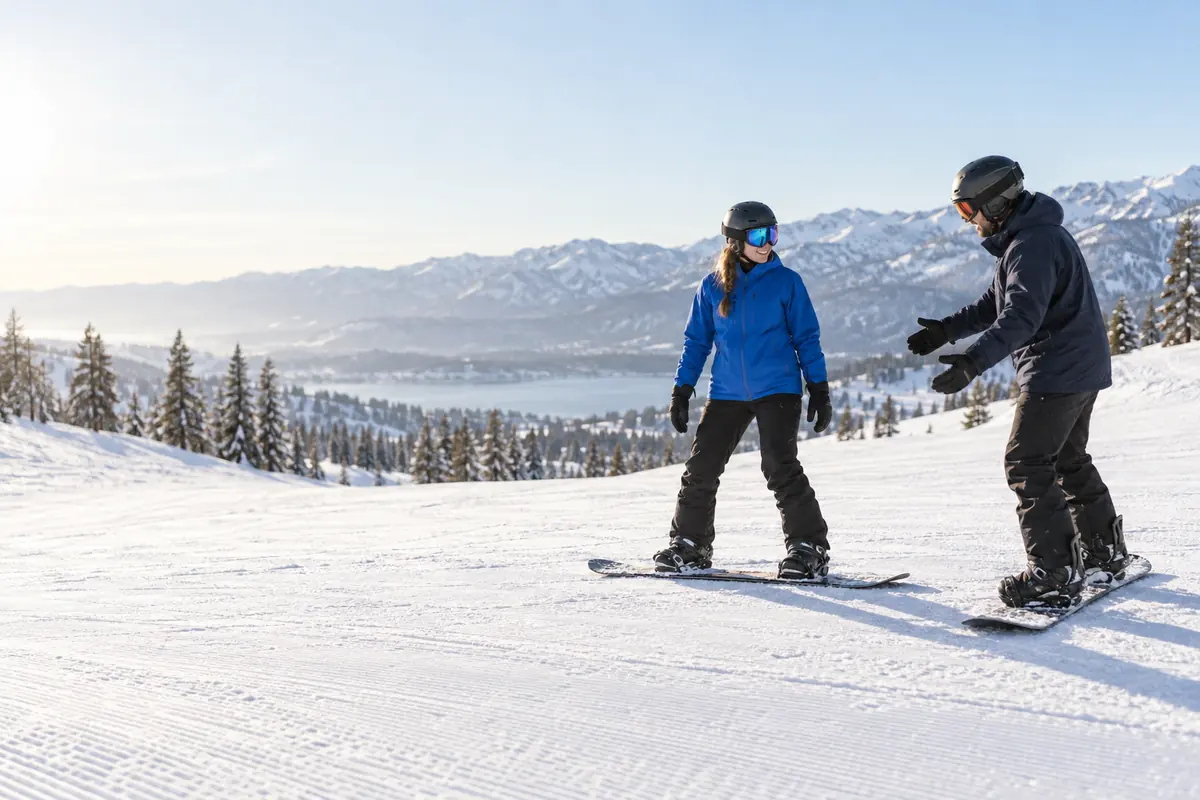
Helping someone learn
Support a friend’s first days while an instructor does the teaching.
Next-level skills
To become a snowboard instructor, you usually get hired by a snowsports school and then train and pass an assessment with your country’s national instructor organization, such as AASI in the US, CASI in Canada or BASI in the UK. Here is how each pathway works, as published on their sites.
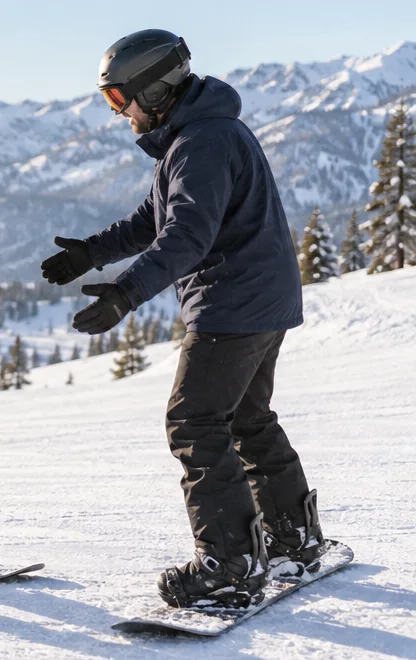
At a glance
Your pathway usually depends on the country where you want to teach first.
The first step toward becoming a certified snowboard instructor is choosing whose system to follow. Most countries with a snowsports industry have a national instructor body with graded levels. Here is how three English-language systems describe themselves (all checked 23 September 2026):
| Country | Organization | Levels it lists | Where you start |
|---|---|---|---|
| United States | PSIA-AASI (American Association of Snowboard Instructors) | Level I, II and III | Snowboard Level I, for existing instructors who are members |
| Canada | CASI (Canadian Association of Snowboard Instructors) | Level 1 to Level 4 | CASI Level 1 instructor course |
| United Kingdom | BASI (British Association of Snowsport Instructors) | See BASI’s “levels explained” page | A Level 1 qualification |
On its snowboard certification page, PSIA-AASI says a Level I instructor “is qualified to teach beginner or novice guests, primarily on beginner or novice (green) terrain”; Level II can teach “through the intermediate zone”; and Level III is “qualified to teach all students and on expert (black) terrain.” Members with Level I can also work toward a Children’s Specialist or Freestyle Specialist certificate.
CASI’s becoming an instructor page says that to be a recognized snowboard instructor in Canada you must complete the CASI Level 1 course, offered at resorts across the country and internationally. It lists Levels 1 to 4 plus specialist programs, including Park 1 and Park 2, Carving and Big Mountain instructor certifications.
The British Association of Snowsport Instructors trains instructors in five disciplines, including snowboard, with a Level 1 qualification as the entry point. Its snowboard courses page lists current dates and says approved BASI business partners run longer programs worldwide that add extra training on top of the qualification.
Which qualifications are accepted for work varies between countries and even resorts. If you plan to teach abroad, ask the employer there which ones they recognize.
Each organization sets its own rules, and they change between seasons.
As published on each body’s site on 23 September 2026:
Beyond the formal rules, expect to need confident riding on the terrain your level covers. If you aren’t there yet, keep riding and take lessons yourself; our guides to carving clean turns and riding with your other foot forward cover skills worth polishing with a coach. For a sense of how riding skills build over time, see our overview of the stages of learning to snowboard.
Some schools and courses also ask for first aid training, child safeguarding or background checks, especially for teaching children. Check the current list with the provider and your employer.
Expect online learning, on-snow training and a practical assessment.
The detail differs by organization, but the AASI pathway (as described on its certification page) gives a good picture of the typical shape:
Higher levels generally mean more teaching experience and stronger riding, so most people move up over several seasons. Remember the assessment checks whether you can keep guests safe and help them progress, not just how well you ride.
Budget for more than the course, and start your job search early.
PSIA-AASI’s advice for new instructors is to decide what you want to teach, how much you want to work and where, and to research ski areas early because hiring season depends on the region and some areas recruit in summer. It suggests asking employers questions such as:
Course fees, membership dues and assessment costs are set by each organization and change regularly, so take them from the provider’s current course page. Also budget for travel, accommodation during training, your own gear and any first aid course.
Private lessons are usually booked through a snowsports school, and most resorts control who may teach on their slopes. Teaching independently can require permits, insurance and specific qualifications depending on the country and resort, so check the resort’s rules and local law before offering lessons.
Teaching in another country can also need a visa or work permit. Check the destination government’s official immigration website and the employer’s requirements.
Confirm these with the provider, and note the date you checked.
If you mainly want to help friends or family get started rather than teach for a living, read our advice on helping a beginner. And if you’re still choosing a school for your own coaching, our guide to comparing snowboard schools lists the questions to ask.
Common questions
Choose the national organization for the country where you want to teach, such as PSIA-AASI in the US, CASI in Canada or BASI in the UK, then complete its training and on-snow assessment. In the US, AASI certification is for existing instructors who are members, so most people get hired by a school first.
BASI, the British Association of Snowsport Instructors, offers snowboard qualifications starting at Level 1. Its snowboard courses page lists current dates and requirements, and approved business partners run longer programs worldwide.
CASI says you must complete its Level 1 instructor course, offered at resorts across Canada and internationally. As of 23 September 2026, you must be at least 14 to enroll.
Most private lessons are booked through a snowsports school, and resorts usually control who can teach on their slopes. Working independently may need permits, insurance and recognized qualifications, so check the resort’s rules and local law first.
Fees differ by organization and change regularly, so check the provider’s current course page. Also budget for membership, travel, accommodation, lift access, equipment and any first aid course.
Related guides
Support a friend’s first days while an instructor does the teaching.
Find a good place to learn nearby and compare lessons before booking.
Move from skidded turns to clean, carved turns on the edge.