Gear guide

Inspect before you pay

How to buy a used snowboard

To buy a used snowboard well, identify exactly what it is, inspect the base, edges, inserts, topsheet and shape in good light, and confirm it suits your weight, boots and bindings before you agree on a price.

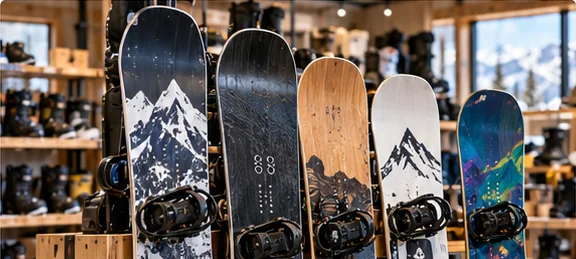
Snowboards with bindings lined up on a shop rack, the kind of selection you might check when you buy a used snowboard

At a glance

  • Identify the model
  • Inspect in good light
  • Check it fits you

Identify the model and age

Knowing exactly what the board is lets you check its size chart and original purpose.

Before you buy a used snowboard, find out exactly what it is. The model name, length and season tell you what type of riding it was built for, which size chart applies and whether spare parts or information are still available.

  • Read the board. The brand and model name are usually on the topsheet or base graphics. The length is often printed near the tail or on a sticker on the base or sidewall.
  • Look for a serial number or production sticker. These are often on the base or sidewall. Some manufacturers can tell you about a board from its serial number if you contact their customer service.
  • Scan it, if the brand supports it. CAPiTA’s board registration page explains that its 2021 and newer boards carry an NFC chip: you hold your phone over the nose of the board to bring up registration and the serial number. It lists compatibility as all Android phones and iPhone 6 and newer. Older boards won’t have the chip.
  • Compare the graphics. Graphics usually change from season to season, so searching the model name and comparing images from the brand or retailers can help narrow down the year. This is often the quickest way to identify a Burton or any other big-brand board.
  • Ask the seller. Ask how old it is, how often it was ridden, whether it has had repairs and whether they have the receipt. Treat answers as a guide, not proof.

Once you know the model, look up what the manufacturer says it is for, and check its type, profile and flex against your riding. Our guide to board types, profiles and flex explains what those terms mean for you.

Check the base and edges for damage

To tell if a snowboard is in good condition, inspect it in good light, ideally indoors and dry. Run your fingers carefully along the base and edges, and sight along the board from the tail.
Base

  • Light scratches are normal on a used board and are often cosmetic.
  • Gouges that reach the core (you may see a different color or material under the base) need a proper repair. See snowboard base repair.
  • A dry, whitish or furry-looking base usually means it needs waxing. See how to wax a snowboard.
  • Bubbles or soft spots can indicate the base is separating from the core. Walk away unless a technician confirms it can be fixed.

Edges

  • Surface rust is common and often removable during a tune.
  • Cracked, lifted or missing sections of edge are serious. They can affect grip and let water into the board. These need a technician’s assessment.
  • Dull edges can usually be sharpened, but if the edges have been ground down a lot there may be little left. See our edge sharpening guide.
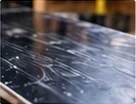
Close-up of a snowboard base, the area to check for gouges and damage

Inspect the inserts, topsheet and core

  • Inserts or channel. Look into each insert hole for damaged threads, rust or signs that it has been pulled or spun. If you can, bring a screwdriver and test that a screw threads in smoothly. A damaged insert affects binding mounting and needs specialist repair.
  • Topsheet. Chips and scuffs are usually cosmetic, but cracks, especially around the inserts or near the edges, can let water into the core.
  • Sidewalls. Look for cracks, dents or separation between layers.
  • Delamination. Check the nose and tail for layers separating. Press gently along the tips: soft or spongy areas are a warning sign.
  • Shape. Place the board on a flat floor and look along it. Compare its profile with how the manufacturer describes that model. A kink, twist or unexpected flat spot can mean core damage.

Repairs to cracks, edges and inserts are best done by a technician. See topsheet and edge repair to understand what is involved.

Make sure it fits you and your bindings

A board in perfect condition is still the wrong board if it does not fit.

  1. Size: look up the model’s official size chart and check that your weight is in the recommended range for that length. See our snowboard size guide.
  2. Width: check the model’s guidance for your boot size, so your toes and heels will not drag in turns.
  3. Mounting pattern: check that your bindings are compatible with the board’s inserts or channel. Burton’s binding mounting guide explains the common patterns, including older ones like 4x4 and 3D that you may find on used boards. See also how to tell what size bindings are.
  4. Included bindings: if bindings come with the board, identify the model and size and check they fit your boots. Inspect straps, ratchets, highbacks and baseplates for cracks, and check that all mounting hardware is included.

If you are buying from a shop or a manufacturer’s own used-gear program, ask whether the board has been checked or tuned and what returns policy applies. Warranty terms may not apply to second-hand buyers, so check with the brand if that matters to you.

Judging the price, and when a board is worn out

What affects a fair price

Used prices vary a lot by region, season and seller, so there is no single right number. The main factors are:

  • The model and how recent it is.
  • Its condition, especially any damage to the base, edges, inserts or core.
  • Whether bindings are included, and their condition.
  • Whether it has recently been tuned or repaired by a shop.
  • The cost of any work it needs before you can ride it.

To judge a price, compare several listings for the same or similar models in your area, and compare the cost of new equivalents. Burton’s guide to pricing vintage boards gives the same advice for collectors: find at least a few examples of the specific model to work out an average price, and remember that not every seller describes wear accurately. Add the likely cost of a tune or repair; a shop can give you a quote. If the total gets close to buying new, new may be the better choice.

How to tell if you need a new snowboard

There is no fixed number of days after which a snowboard must be replaced. A board is usually at the end of its useful life when the core is damaged, edges are cracked or worn away, inserts no longer hold, or it has lost its shape and no longer rides as it should. If you are unsure whether a board is safe to ride, ask a technician. A board that is sound but no longer suits you is worth passing on; see what to do with an old board.

Common questions

Buying second-hand: common questions

How can I tell if a used snowboard is in good condition?

Identify the model, then inspect it: the base should have no deep gouges or bubbles, the edges should be intact, the inserts should thread cleanly, and there should be no cracks, delamination or kinks. It also needs to suit your weight, boot size and bindings.

How can I tell how old a snowboard is?

Look for the model name and any serial number or production sticker, then compare the graphics with images from the brand or retailers, since graphics usually change each season. Some manufacturers can help if you contact them with the serial number.

How do I find out what kind of snowboard I have?

Find the brand and model name on the topsheet or base and the length on the board. Then look up how the manufacturer describes that model, including its shape, profile, flex and intended terrain.

How often should I replace my snowboard?

There is no fixed schedule. Replace a board when it is damaged beyond sensible repair, the edges are cracked or worn out, the inserts will not hold, or it no longer suits your riding. Regular maintenance helps a board last longer.

How much should I sell a used snowboard for?

It depends on the model, age, condition and your local market. Compare several recent listings for the same or similar models near you and adjust for any damage or included bindings.

How do I scan a CAPiTA snowboard?

CAPiTA says its 2021 and newer boards have an NFC chip in the nose. Hold your phone over the nose of the board and follow the prompt to register it and see the serial number. Older boards do not have the chip.

Sources for this used-board checklist