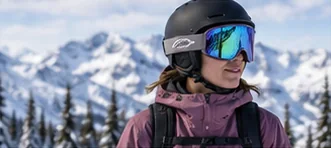
How to choose snowboard goggles
Fit goggles with your helmet, choose lenses and ride with glasses.
Gear guide
Snug, level, certified
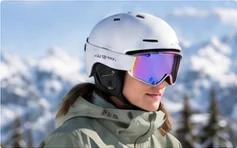
To pick a snowboard helmet, measure around your head just above the eyebrows, choose the size on that helmet’s chart, check the label for a snow-sport standard such as ASTM F2040 or EN 1077, then confirm it sits level, feels snug and doesn’t shift when you shake your head, wearing your goggles.
Part of What to wear and protective gear
At a glance
A soft tape measure gives you the starting point for every size chart.
The first step when you pick a snowboard helmet is your head circumference. Bern’s buyer’s guide puts it simply: measure your head circumference and select the correct size. Our method:
Head shape matters too. Some heads are rounder, others longer front to back, and brands suit different shapes. Trying helmets on, ideally in a shop, is still the best test.
Compare your measurement with the size chart for the exact helmet you want. Small, medium and large cover different ranges from brand to brand. If you’re between sizes, try both and keep the one that’s snug without pressure points.
| Standard | Where it applies | Who lists it |
|---|---|---|
| ASTM F2040 | US standard for recreational snow sports helmets | Bern; Smith |
| EN 1077 (Class A and B) | European standard for skiing and snowboarding helmets | Bern; Smith |
| CPSC 1203 | Listed by Smith as a North American certification mark | Smith |
Bern describes EN 1077 Class A as offering maximum coverage and Class B as a lighter construction with more ventilation. The same helmets are sold for skiing and snowboarding, so choosing ski and snowboard helmets works the same way: look for a snow-sport standard on the label inside and in the product details, and check which standards apply where you ride.
Small adjustments turn a good helmet into a secure one.
Smith’s helmet safety guide says a correctly sized helmet should fit snugly, with your head partly compressing the liner even before the straps are done up, and shouldn’t move on its own when you shake your head. It adds a skin test: shifting the helmet side to side or front to back should wrinkle the skin on your forehead.
Wear a thin, helmet-compatible liner or nothing underneath. A thick beanie changes the fit.
Smith lists integrating well with your goggles as part of choosing a helmet. Try the helmet with the goggles you’ll ride in and check that:
Matching brands can help, but plenty of mixed pairings fit well; what counts is how they sit on your face. For lens tints and frame sizes, read our goggle buying advice.
Smith’s replacement guidance says to replace a helmet after a crash or impact even if it looks fine, because absorbing an impact can weaken the materials. Without a crash, Smith says to replace it after 5 years of active use or 10 years from the manufacture date, whichever comes first. Other brands set their own schedules, so check yours.
Smith’s care advice is to use a soft cloth or sponge with mild soap and water, avoid harsh cleaners and solvents, hand-wash removable pads and lay them flat to dry. Let the helmet dry fully before storing it.
A helmet reduces risk; it doesn’t make riding safe on its own. Ride within your ability and consider booking lessons as you progress. For the rest of your kit, from base layers to gloves, see our guide to dressing for the mountain and the first-day packing list.
Common questions
Wrap a soft tape measure level around your head about a finger’s width above your eyebrows and just above your ears. Compare the result with the size chart for the helmet you want.
Use your head measurement on that brand’s chart, then try it on. Smith says a correct size fits snugly, partly compressing the liner even with the straps undone, and doesn’t move on its own when you shake your head.
After any crash or impact, and otherwise on your maker’s schedule. Smith says 5 years of active use or 10 years from manufacture, whichever comes first.
Yes: snow helmets are certified to snow-sport standards such as ASTM F2040 or EN 1077 and are used for both. Check the label for those standards.
A thick beanie usually stops the helmet fitting properly. Use a thin, helmet-compatible liner if you need warmth, and check the fit with it on.
Related guides
Fit goggles with your helmet, choose lenses and ride with glasses.
Layer up to stay warm, dry and comfortable all day.
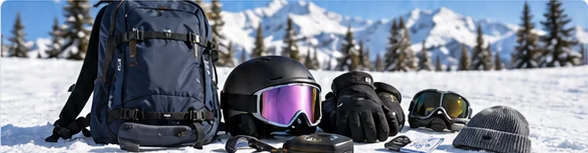
Everything you need to feel prepared for a great first day on snow.