
How to clean snowboard goggles
Clean goggles safely, prevent fogging and store them properly.
Gear guide
See clearly, stay comfortable
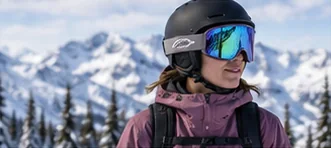
To choose snowboard goggles, try them on with your helmet and make sure the foam seals all around your face, then pick a lens by VLT: darker for sun, lighter for cloud and flat light. If you wear glasses, look for OTG (over-the-glasses) frames.
Part of What to wear and protective gear
At a glance
A goggle that doesn’t seal will let in cold air and snow, and fog.
Fit is the first test when you buy snowboard goggles. Smith’s anti-fog advice is to make sure goggles form a tight seal on your face and to wear your helmet or hat when you try on new goggles; it notes that frames come in sizes from small to XL.
With your helmet on, check that:
Some frames come in low-bridge or smaller-face versions, worth trying if standard frames gap around your nose. If you haven’t settled on a helmet yet, our helmet sizing and fit guide covers the other half of the pairing.
Anon explains that visible light transmission (VLT) is the percentage of light a lens lets through, and that low-VLT, darker lenses suit sunny days while high-VLT, lighter lenses are best in low light. Anon groups lenses into filter categories like this:
| Category | VLT (per Anon) | Conditions |
|---|---|---|
| S0 | Over 80% | Overcast, fog, night |
| S1 | 43–80% | Dull, overcast, foggy days |
| S2 | 18–43% | Mixed, changing weather |
| S3 | 8–18% | Bright sun |
| S4 | 0–8% | Intense brightness such as high-altitude glaciers |
Check each lens’s stated VLT or category instead of judging by color; a mirror finish can make a lens look darker than it is. If you ride in all kinds of weather, goggles with interchangeable lenses let you carry a spare, and photochromic lenses change tint with the light. Our page on mountain snow and weather conditions explains how quickly the light can change.
Try OTG goggles with your actual glasses, as frame size and shape affect comfort and fogging.
When you take them off, don’t push goggles up onto your forehead. Smith says this traps heat and moisture inside; wear them on your helmet or carry them instead.
Whether you shop in person or online, run through this list before you pay:
If you’re putting together a whole outfit at once, it helps to buy goggles and helmet together so you can test the pairing on the spot.
Lens-change systems vary: magnets, levers or clips, or flexing the frame to ease the lens out. Follow the instructions for your exact model; the wrong technique can crack a lens or frame.
Taking care of your goggles between rides matters just as much as the lens you choose; our advice on cleaning lenses and stopping fog covers drying and storage. For the rest of your outfit, from layers to gloves, see our snowboard clothing and layering guide.
Common questions
The foam should seal evenly against your face without pressing hard on your nose, and the frame should meet your helmet brim without a gap of bare forehead. Always try them on with your helmet.
Yes. OTG goggles fit over glasses, some goggles accept prescription inserts, and contact lenses let you wear any goggles. Try OTG goggles with your own glasses before buying.
A lighter, higher-VLT lens. Anon puts S1 lenses at 43–80% VLT for dull, overcast days, while darker S3 lenses suit bright sun.
Tight enough that the foam seals and the goggles stay put, but not so tight that they press on your nose or give you a headache.
Over. The strap wraps around the outside of the helmet, usually held by a clip at the back, with the frame sitting just below the brim.
Related guides
Clean goggles safely, prevent fogging and store them properly.
Measure, fit, adjust and replace a snowboard helmet.
Layer up to stay warm, dry and comfortable all day.