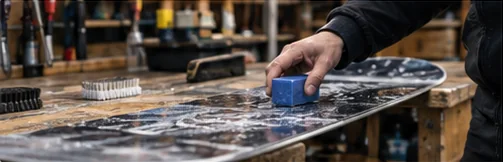
How to wax a snowboard
Hot wax your board at home: prep, iron, cool, scrape and brush.
Board care
Soap, cleaner or hot scrape
To clean a snowboard, wipe off snow and grit, wash the base with mild dish soap and water or a base cleaner, wipe the topsheet with a damp cloth, and dry everything, especially the edges. Here is how to do each part properly, with or without base cleaner.
Part of Snowboard maintenance and repairs
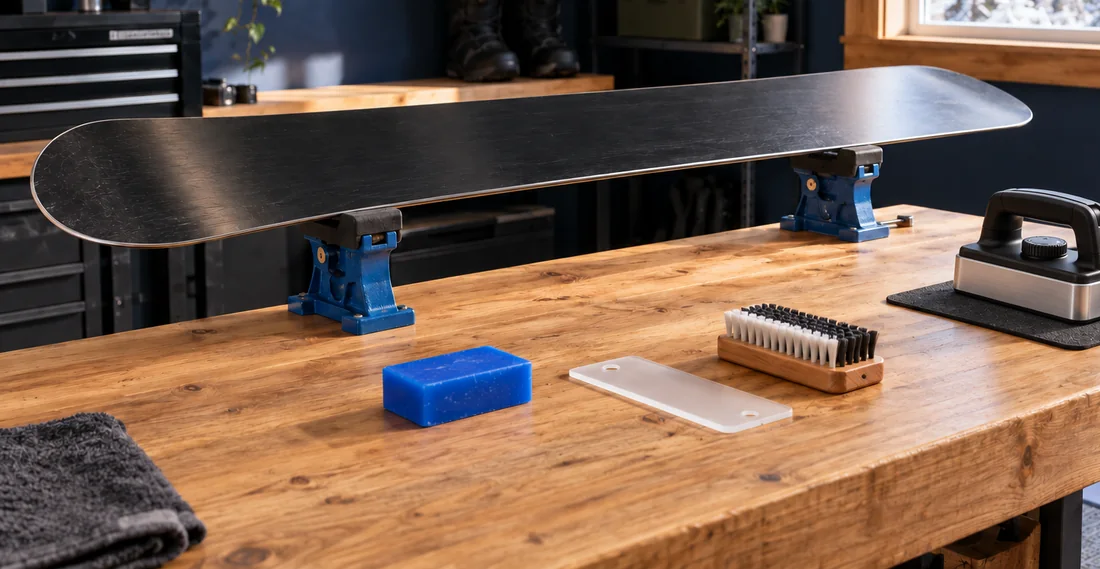
Tools and materials
Most cleaning needs only rags and soap. Add a base cleaner if the base is grimy or you are about to wax.
At least two: one damp for washing, one dry for finishing. Lint-free cloths are best on the base.
A gentle soap diluted in water handles everyday dirt on the base and topsheet.
A citrus-based ski and snowboard base cleaner for heavy grime. Follow its label.
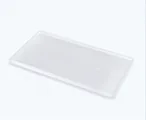
Lifts old wax and dirt off the base, and is needed for a hot scrape.
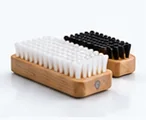
Clears old wax and grit out of the base structure.
Step by step overview
Remove snow, slush and grit from every surface with a towel.
Use diluted dish soap for light dirt, or a base cleaner for heavy grime.
Mild soap, warm water and a cloth, then a dry rag.
Dry the steel carefully and let the board air-dry before bagging it.
A two-minute wipe-down at the end of the day does most of the work.
The simplest way to clean a snowboard is to do a little every time you ride. Snow melts into dirty water on the base, grit sits on the topsheet and moisture clings to the edges. Clearing that away the same day keeps the board fast and stops rust from starting.
This quick routine is the everyday habit behind everything in our complete board-care routine. The deeper cleaning below is for when the base looks grimy, before a wax, or before the board goes into storage.
Burton’s base-maintenance guide explains why the bottom of the board is worth cleaning: dirt and old wax slow you down, chemicals picked up from snow or the environment can contribute to base and edge delamination if they linger, and a clean base absorbs wax better. It describes two levels of cleaning.
For stubborn grime, or right before hot waxing, Burton says a citrus-based snowboard base cleaner or isopropyl alcohol can be used, applied according to the cleaner maker’s directions and then dried with a clean rag. Directions really do differ between products. Wend, a wax maker, tells users of its own cleaner to spread a thin zigzag line of liquid down the base and let it sit for 10 to 20 minutes, noting that the base will haze over and look dried out. Toko’s care manual says to leave its wax remover on briefly, rub it off with a cloth, and let the base air for about 15 minutes before waxing.
Use cleaners sparingly. RaceWax advises cleaning the base by brushing and hot scraping and to “avoid overuse of chemical cleaners.” Whatever you use, let the base dry fully before any wax goes on; the waxing steps themselves are in our hot-waxing walkthrough.
You have two good options. For everyday dirt, the soap-and-water method above is enough. For ground-in spring grime, use a hot scrape, which uses warm wax as the cleaner. PSIA-AASI describes it this way: spread a generous layer of all-temperature wax across the whole base and scrape it all off immediately, before the base cools, so it pulls the dirt out. RaceWax suggests repeating with an inexpensive soft wax until the scraped-off wax comes away clean.
Old wax that has turned gray or dirty, or a thick storage coat, needs to come off before you ride or rewax. Work from the gentlest method up:
Remember that the goal is clean wax in the base, not a base stripped bare. RaceWax puts it simply: “You want wax in your base, not on your base.” After a deep clean, rewax promptly; if you are not sure how often that should be, see our wax-timing guide.
The topsheet and sidewalls collect road grime, salt spray and scuffs. Burton’s storage guide recommends a mild household cleaner such as dish soap, warm water and a cloth rag to wipe down the board and bindings, followed by a dry rag to remove moisture.
Edges need drying more than washing. After wiping the base and topsheet, run a dry towel along each edge from nose to tail, taking care, as edges can be sharp and burrs can catch skin and cloth. Pay attention to the tip and tail, where water pools.
If you find orange spots or a rough film, that is surface rust, and cleaning alone will not remove it. Our guide to getting rust off your edges explains how, and edge sharpening and deburring covers the next step. Wipe away metal filings after any edge work so they are not ironed into the base when you wax.
Bindings collect grit in the ratchets, straps and baseplate, which can make buckles stick. Burton’s storage guide gives bindings the same treatment as the board: warm soapy water on a cloth, then a thorough dry.
We suggest not greasing or oiling ratchets unless your binding maker’s instructions say to, since lubricant can attract more grit. If you take the bindings off to clean the board, note your settings first and use the binding setup steps to put them back.
A damp, gritty bag undoes a clean board. Check the bag maker’s care label first, since materials and padding vary. As a general approach:
A clean, dry bag matters most before long trips and off-season storage. See flying and traveling with your board and summer storage for your snowboard.
Common questions
For light dirt, Burton recommends mild dish soap diluted in water, sprayed on, left for a few minutes and wiped off with a damp rag, then dried. For heavy grime or before hot waxing, Burton says a citrus-based base cleaner or isopropyl alcohol can be used, following the cleaner maker’s directions.
Follow the label, because products differ. Typically you spread it over the base, let it sit for the time given (Wend says 10 to 20 minutes for its cleaner), wipe it off with a clean cloth, and let the base dry fully before waxing.
Yes. Use diluted dish soap and water for everyday dirt, or do a hot scrape for ground-in grime: iron on soft or all-temperature wax and scrape it off while warm, repeating until the scraped wax comes off clean.
Wipe the topsheet with warm water, a little mild soap and a cloth, then dry it with a clean rag. Avoid harsh solvents and abrasive pads, which can damage the graphics.
Wipe them with warm water, a little mild soap and a cloth, work grit out of the ratchets and straps, then dry them and let them air-dry. Check the buckles and mounting screws while they are clean, following your binding manual.
Wipe and dry it after every riding day. Give the base a proper wash when it looks dirty, before hot waxing, and before storing the board for the off-season.
More board care
Hot wax your board at home: prep, iron, cool, scrape and brush.
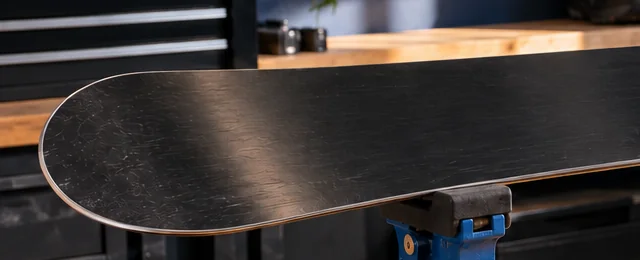
Rub off surface rust, spot pitted steel and stop edges rusting again.
Clean, dry, wax and store your board so it is ready next season.