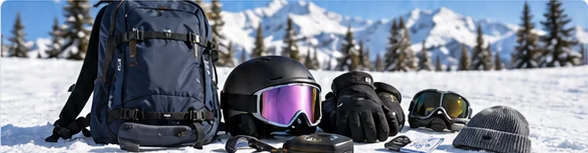
Your first-day checklist
Everything you need to feel prepared for a great first day on snow.
Beginner skills
Before the snow
You can’t fully learn to snowboard at home, but you can arrive fitter, steadier and already comfortable with your gear. This guide covers what to practice without snow, where to ride year round, and what to save for the slope and your instructor.
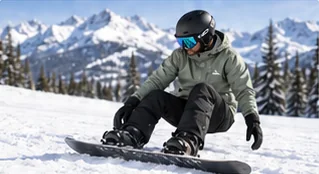
At a glance
Stronger legs and better balance make the first days on snow more comfortable.
The most useful way to learn to snowboard at home is to prepare your body, and you don’t even need a snowboard for it. Snowboarding works your legs, core and balance, and beginners spend a lot of time getting up from the snow. Arriving with some strength and stamina means you can practice longer before fatigue makes you sloppy.
If you have an injury or health condition, or haven’t exercised in a while, check with a health professional before starting a new routine. Build up gradually and stop if anything hurts.
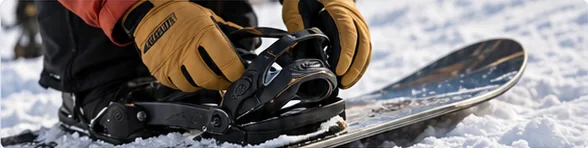
Handling your kit at home saves time and stress on the mountain.
If you own or have borrowed gear, home is the ideal place to practice with it, without cold fingers or a line behind you.
The core riding skills depend on sliding, so there is no at-home shortcut.
It’s tempting to look for a way to learn to snowboard without snow, but the core skills depend on sliding. You need snow, or a suitable artificial slope, and ideally an instructor for:
A written guide or video can explain what a movement should feel like, but it can’t see what your body is doing. PSIA-AASI makes the same point about its beginner video series: the videos help you know what to expect, but “do not replace an on-snow lesson.” How quickly those on-snow skills come varies; our overview of the typical learning curve sets realistic expectations.
Keep home practice low and slow; learn features in a real park with coaching.
People often ask how to practice snowboard tricks or jumps at home, or how to build a backyard snowboard park. We advise against it for beginners. Improvised ramps, rails and trampolines with a board or bindings attached can cause serious injuries, and a backyard slope has no groomed landing, no ski patrol and often hidden hazards such as fences, rocks, ice and trees.
What you can do safely at home is the groundwork: the flexed stance, balance drills, and slow nose-to-tail weight shifts (the movement behind an ollie) standing on the floor with no board attached. Then learn the real thing on snow, starting with our guide to first jumps in a terrain park, ideally with a coach.
Indoor snow centers and dry slopes let you ride between trips.
If you want to snowboard in the summer or keep your skills fresh between trips, look for places that recreate the slope under supervision:
Facilities, opening times, age limits and lesson formats vary, so check each venue’s own website. Our guide to finding a place to learn near you explains how to compare them.
A short plan so your preparation pays off.
Practice goals
Checking a box records your preparation at home. Your instructor will build the on-snow skills with you.
Common questions
You can prepare at home by building balance, leg strength and stamina, learning your stance and practicing with your boots and bindings. Core riding skills such as stopping and turning need a slope and are best learned with a qualified instructor.
Indoor snow centers and dry slopes let you learn and practice without natural snow, and many offer beginner lessons and equipment hire. Check each venue’s own website for current lesson formats and booking rules.
Hold the athletic stance, rock your weight from heels to toes, work on single-leg balance and build leg and core strength. These drills get your body used to the positions you’ll use on the board.
For beginners, we advise against it. Homemade ramps and rails have no groomed landing or ski patrol and often sit near hazards like fences and trees. Learn jumps and features in a resort terrain park with coaching.
Indoor snow centers and dry slopes operate outside the winter season in many places, and some riders travel to glaciers or the southern hemisphere. Check opening times and conditions directly with each venue.
Up next
Everything you need to feel prepared for a great first day on snow.
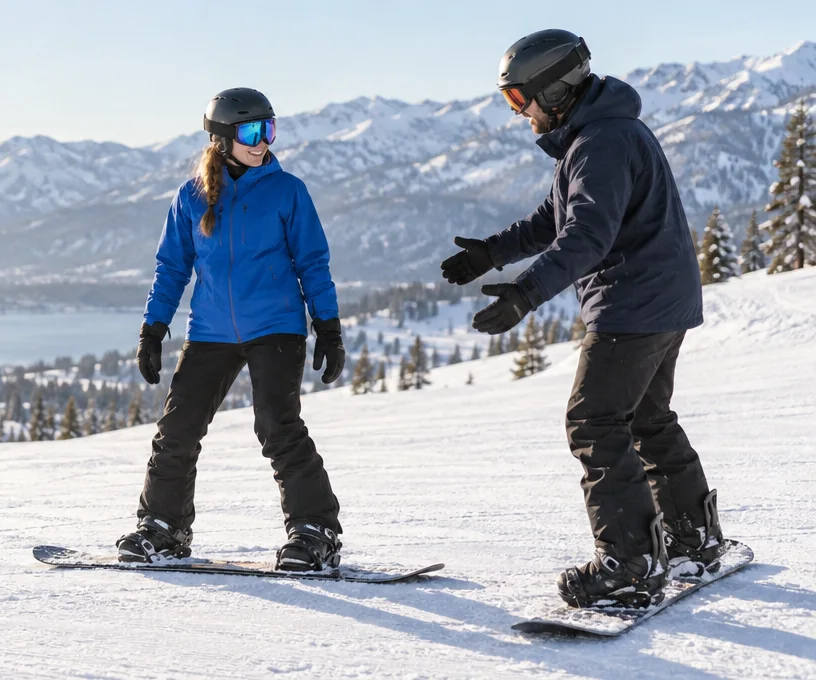
Find out if you ride regular or goofy and how to stand on a board.
Find a good place to learn nearby and compare lessons before booking.