Snowboard topsheet and edge repairs
Sort cosmetic chips from structural damage and know what to repair where.
Board care
Small fixes at home, big ones at a shop
To fix a deep gouge in a snowboard, clean it, drip in P-Tex until it sits slightly proud, let it harden and scrape it flush, but only if the gouge stops in the base. If you can see core material, it’s a shop job.
Part of Snowboard maintenance and repairs
Tools and materials
Only for gouges that stay in the base and don’t reach the core or edges.

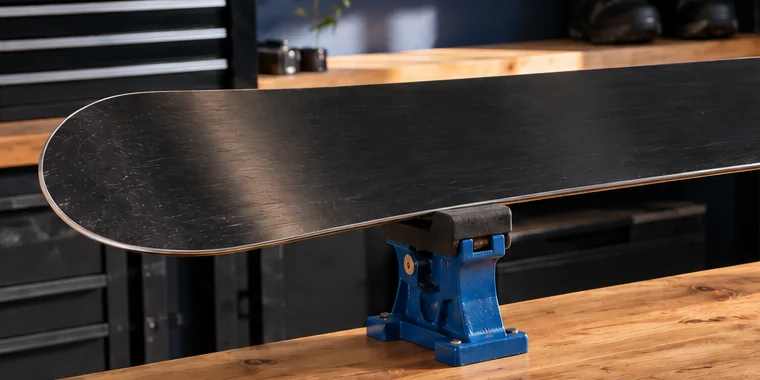
Hold the board base-up, level and steady.
Base repair material sold for skis and snowboards, plus a lighter for a drip candle.
Levels the hardened repair flush with the base.
Clean out wax and dirt, and trim loose flaps of base.
Molten P-Tex burns, and its fumes need fresh air.
Step by step overview
Decide whether it’s a scratch, a gouge or a core shot.
Clean, dry and trim the damaged area.
Drip P-Tex in with a small, clean flame until it sits slightly proud.
Let it harden, scrape flush and wax the board.
At a glance
Most marks on a base don’t need fixing.
How you fix a deep gouge in a snowboard depends entirely on how deep it goes. Burton’s base-maintenance guide says most small scrapes and gouges can be repaired at home with a P-Tex candle, while large gouges, core shots, the base separating from the core or blown-out edges need a shop. Clean and dry the base, look at it in good light and sort the damage:
| Damage | How it looks | Repair |
|---|---|---|
| Light scratches | Fine lines you barely catch with a fingernail | Usually nothing beyond regular waxing |
| Small gouge | A clear cut, but base material still visible at the bottom | P-Tex at home |
| Large or long gouge | Wide, deep or running a long way down the board | Shop: base weld or patch |
| Core shot | Wood, fiberglass or other non-base material showing | Shop |
| Damage at the edge | Gouge running into the steel, or the edge has moved | Shop; see edge repair |
If the damage reaches the steel, our guide to fixing chipped, bent or cracked edges covers what happens next.
Scratches are the most common base damage and usually the least important. Fine scratches are normal wear; waxing keeps the base protected and gliding, and you don’t need to fill every line. Our home waxing guide covers that routine.
Deeper scratches you can clearly feel with a fingernail can be filled with P-Tex exactly like a small gouge. If the whole base is covered in scratches, ask a shop about a base grind, which flattens the base and restores its texture in one go.
A core shot is damage that goes through the base to the layers underneath. It matters because it lets water reach the core, which can weaken it and cause layers to separate over time. Signs include:
Burton recommends a shop base patch or weld for core shots. Tognar, which sells repair materials, explains that P-Tex usually won’t bond where a gouge exposes steel edge or fiberglass, so a copolymer material goes in first with P-Tex layered on top. That extra step is why we suggest drying the board, not riding it, and taking it to a technician.
Good for small gouges, not for structural damage.
P-Tex (ptex) is the common name for the polyethylene plastic that snowboard bases, and base-repair candles and sticks, are made from. Burton’s guide notes that extruded bases are cheaper while sintered bases are usually more durable, faster and absorb wax better; the drip-candle method below works the same way on both, and a shop can use harder repair materials for bigger damage.
Burton also warns that P-Tex fumes are toxic and burning P-Tex is molten plastic that can cause severe burns, and suggests a respirator and gloves.
Tognar describes soft drip candles as fast and easy but quick to wear, while harder repair ribbon, string or sticks applied with a repair iron or gun take longer and last much longer. A candle repair can also pop out if it doesn’t bond. If yours wears away or falls out, that’s a sign to try harder material or hand it to a shop.
Shops have more durable options than a candle. A base weld melts harder repair material into the gouge so it bonds with the base; a base patch cuts out a damaged section and replaces it. Ask a technician about these when:
Ask what the repair includes and whether a grind and wax are part of it.
Run your hand over the repair to check it’s flush. After your next day on snow, look again: if it has lifted, cracked or worn into a dip, have a shop redo it with a harder material.
Base checks belong in your regular board care routine. While the board is on the bench, it’s a good time to deburr and sharpen the edges and clear any orange rust spots on the steel.
Common questions
If the gouge stops in the base material, clean it, fill it with P-Tex slightly above the base, let it harden and scrape it flush, then wax. If you can see core material, or it reaches the edge, take it to a shop for a base weld or patch.
Fine scratches are normal and just need regular waxing. Deeper scratches can be filled with P-Tex like a small gouge, and a shop base grind can restore a heavily scratched base.
A drip candle alone isn’t a reliable fix. P-Tex usually won’t bond to exposed fiberglass or steel, so a core shot needs different materials and technique. Burton recommends a shop patch or weld.
Small gouges in a sintered base can be filled with P-Tex the same way, but soft candle material wears faster than the surrounding base. For larger damage, a shop weld with harder material usually lasts longer.
Yes. Wax the whole board after the repair is scraped flush, because the repaired and scraped areas will be dry.
More board care
Sort cosmetic chips from structural damage and know what to repair where.
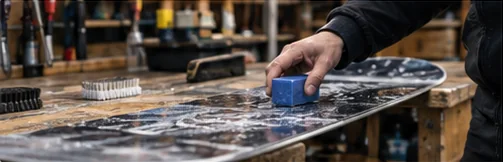
Hot wax your board at home: prep, iron, cool, scrape and brush.
Deburr, sharpen and detune your edges at home, or know when to use a shop.