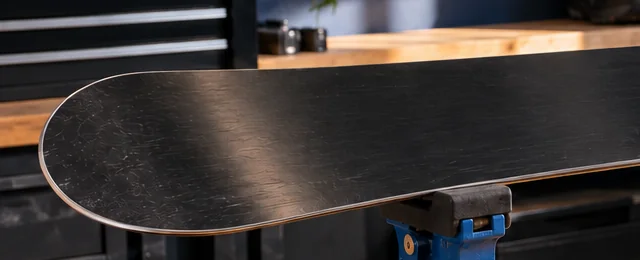
How to remove rust from snowboard edges
Rub off surface rust, spot pitted steel and stop edges rusting again.
Board care
Check your board’s edge spec
To sharpen snowboard edges, clamp the board, deburr with a stone, then file the side edge in light nose-to-tail strokes at your board’s own bevel. Here’s how to do it at home, and when a technician is the better call.
Part of Snowboard maintenance and repairs
Tools and materials
Buy tools that can be set to your board’s edge specification. A shop can advise.
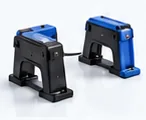
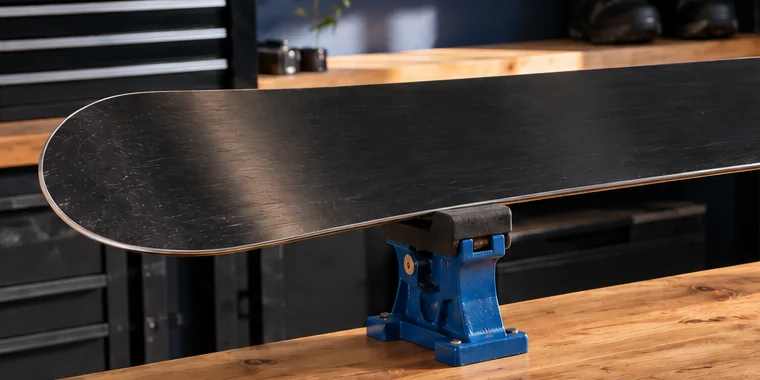
Hold the board steady: on its side for side edges, base-up for base edges.
Holds a file or stone at a set angle. Side-edge and base-edge guides are separate tools.
A file for sharpening, plus a gummy stone or diamond stone for deburring and polishing.
Edges and filings are sharp. A marker line shows where you have filed; a cloth wipes off filings.
Step by step overview
Feel for burrs, look for rust, dents and cracks along both edges.
Get your board’s base and side bevel from the maker or a shop.
Stone off burrs, then make light, overlapping passes with a guide.
Wipe off filings, detune tips only if you want to, then wax.
At a glance
Know what you’re fixing before you pick up a file.
Sharpening a snowboard means filing a clean, consistent corner back onto the steel edges so they grip on firm snow. Before you learn how to sharpen snowboard edges, check whether yours actually need it, because every pass with a file removes a little steel that won’t grow back.
An edge has two faces: the base edge (the bottom, flush with the base) and the side edge (the outside face). Rome’s tuning guide describes the edge as a right angle with those two faces to look after, and they’re tuned with separate guides.
Whichever brand you own, the tool’s own instructions come first. In general, you set the tuner to your board’s side bevel, press its flat face against the base so the file sits on the side edge, and draw it in one direction from nose to tail. Don’t saw back and forth. We suggest coloring the edge with a marker first: when the line is gone evenly, you’ve filed enough.
There’s no universal edge angle. Use your board’s spec.
A bevel is the angle filed onto each edge face. Base bevel lifts the edge slightly off the snow, which makes the board looser and easier to turn. Side bevel makes the edge more acute, which adds grip on hard snow. Brands set boards up differently, and some use different angles on different models.
Brand manuals are the right place to look. For example, Jones’s snowboard FAQ says its boards leave the factory with a 0-degree base and 90-degree side edge angle, come lightly detuned, and that its Magne-Traction edges are tuned with the same tools and technique but a little less pressure. That’s Jones’s spec for Jones boards, not a rule for yours. To find your own:
Changing a bevel is hard to undo, especially on the base edge, because it removes metal. Rome’s advice is blunt: if in doubt, leave the angles as they are. If you want a different feel, talk it through with a technician first.
If you’re comfortable doing it yourself, keep the work light and even:
People sometimes ask how to sharpen snowboard edges without a tool. Freehand filing makes it very hard to hold a consistent angle, so we don’t recommend it; a basic guide or a shop tune is the safer choice.
There’s no fixed schedule. Burton’s base-maintenance guide describes edge sharpening as removing small amounts of metal to get rid of burrs and suggests it bookend your season. Beyond that, sharpen when the edges feel dull or burred, not by the calendar.
Light surface rust usually comes off with a gummy stone before you sharpen, and deep pitting may need filing or a shop. We cover the full process, plus how to stop it coming back, in our guide on getting rust off snowboard edges.
Detuning means dulling part of the edge so it’s less likely to catch. Burton notes it’s mostly rider preference and common for park riders: the more you detune, the less catchy the edges. Rome describes lightly blunting the contact points near the nose and tail with a stone held at an angle, and Jones says further detuning of its already lightly detuned boards is optional if the tip or tail still feels catchy.
Edge work removes metal and changes how the board rides. Use a shop technician if:
Edge care is one part of a wider service; our board tuning and maintenance overview shows where it fits alongside waxing and filling gouges in the base.
Common questions
There’s no fixed interval. Burton suggests sharpening to bookend the season; beyond that, sharpen when edges feel dull or burred or skid on firm snow. Riders on icy snow tend to sharpen more often than casual riders on soft snow.
Use your board maker’s base and side bevel for your model. There’s no universal angle. Jones, for example, lists 0 and 90 degrees for its boards, but other brands and models can differ, so check your own manual or ask a shop.
Set it to your board’s side bevel, rest its flat face on the base, and draw it from nose to tail in one direction with light, overlapping strokes. Check the tool’s instructions, because many handheld tuners only sharpen the side edge.
Rub it along the edge from nose to tail with light pressure to smooth burrs and polish the edge after filing. Tool makers such as Demon describe the gummy stone for edge cleanup and light rust removal.
It isn’t a good idea. Without a guide it’s hard to hold a consistent angle, and you can round or damage the edge. Use a proper edge tool or ask a shop.
More board care
Rub off surface rust, spot pitted steel and stop edges rusting again.
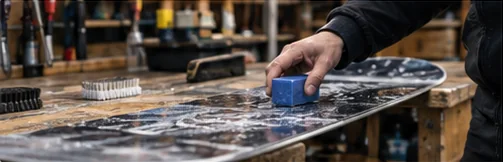
Hot wax your board at home: prep, iron, cool, scrape and brush.
Sort cosmetic chips from structural damage and know what to repair where.