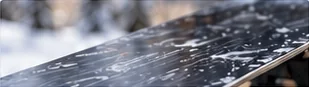
How to sharpen and care for snowboard edges
Deburr, sharpen and detune your edges at home, or know when to use a shop.
Next-level skills
Firm snow control
To snowboard on ice, slow down before the firm patch, keep your weight centered over the board and roll gently from edge to edge instead of making sudden, skidding turns. Well-tuned edges and tight boots help, and switching to a softer run is often the smartest move.
Part of Carving and all-mountain riding
At a glance
Before this guide
Less speed, less twisting, more patience.
How to snowboard on ice comes down to four habits: arrive at firm snow slowly, stay stacked over the middle of the board, change edges with a smooth roll rather than a sudden twist, and finish turns across the hill so you never need one hard braking skid. Your edge has less to bite into on ice and hard-packed snow, so any sudden movement can make it skip and let go.
These are the same edge skills you build when learning to carve cleanly on groomed runs, just used more gently. The rest of this guide covers how to read firm snow, get your board ready and choose when to ride somewhere else.
Know what kind of firm snow you are dealing with before you commit to a run.
“Icy” covers a range of surfaces: hard-packed groomed snow that feels loud and fast, scraped patches where other riders have pushed the soft snow away, and genuinely glassy ice that your edge barely bites. Each asks for a slightly different approach.
If you are unsure, take your first run on terrain a level easier than usual. Our guide to judging snow and weather on the day explains how to read reports and when to change plans.
Clean, tuned edges and a snug setup make a noticeable difference.
No board grips pure ice perfectly, but your equipment can help or hinder you.
If a manufacturer says a board is designed for edge hold on firm snow, check its product page or manual for how it is meant to be ridden rather than relying on marketing claims.
Ride a little slower, stay centered and make smooth, progressive edge changes.
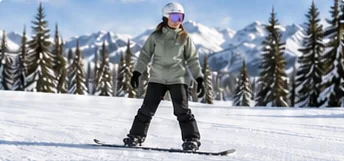
Keep your weight over the middle of the board, knees and ankles flexed, hips over your feet. Leaning into the hill takes pressure off the edge and makes it slide. On firm snow, a balanced, athletic stance keeps weight on the edge where you need it.
Scan ahead. If you see a polished patch, slow down before you reach it, ride across it with a flatter, stable board and gentle edge pressure, then make your next turn on softer snow beyond it. Turning hard in the middle of an ice patch is where many riders slip.
Practice new carving movements on softer groomed snow first, then bring them to firmer runs once they are reliable.
Choosing a different run is part of good riding, not a failure.
The first point of the NSAA’s Your Responsibility Code is to always stay in control and be able to stop or avoid people or objects. On ice, stopping distances get longer, so step back if:
Move to a gentler, less-used run, try slopes that get sun later in the day, or take a break and come back when conditions change. If you need to get down a steep icy section, a slow, controlled sideslip on your heel or toe edge is a valid way to do it, as long as you stay aware of people above and below. Firm snow is also common on steeper pitches and in bump runs, which is why those are harder on icy days.
Riding firm snow well depends on subtle edge control that is hard to judge on your own. A lesson with a qualified instructor lets someone see whether you are leaning in, over-rotating or skidding, and set drills on terrain that suits your level. In the US, PSIA-AASI describes itself as a nonprofit that “supports snowsports instructors through education, certification, and community engagement”; look for PSIA-AASI-trained instructors or the equivalent in your country, and see our tips on booking a lesson that fits your level.
Practice goals
Checking a box records your practice. Ask your instructor when you are ready to progress.
Common questions
Common causes are dull edges, leaning into the hill, loose boots or bindings, and sudden edge changes. Keep your weight centered over the board, tip it onto edge progressively and have your edges checked by a technician if they feel rounded or burred.
Ride at a controlled speed, stay in a balanced stance with flexed knees and ankles, and make smooth, round turns that finish across the hill. Tight boots and well-maintained edges help your board respond and grip.
Well-maintained edges grip firm snow better than dull, burred or rusty ones. Edge sharpening can go wrong if done incorrectly, so ask a shop technician if you are not sure what your board needs.
Slow down, sideslip carefully through the steepest section if you need to, then move to a gentler or less-used run. Coming back later when conditions change is often the best choice.
Up next
Deburr, sharpen and detune your edges at home, or know when to use a shop.
Read snow reports, cover, cold and visibility before you ride.
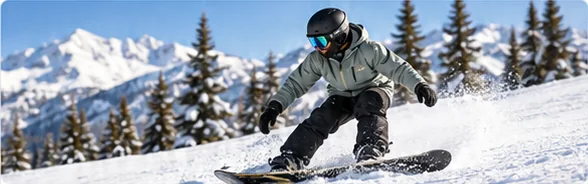
Move from skidded turns to clean, carved turns on the edge.