How to choose a snowboard
Match board type, profile and flex to your ability and terrain.
Gear guides
To choose the right snowboard size, start with your weight and boot size, then find the length and width on the size chart for the exact board you want. Height is only a rough check; ability and riding style help you pick within the range.
Part of Choosing a snowboard
How it works
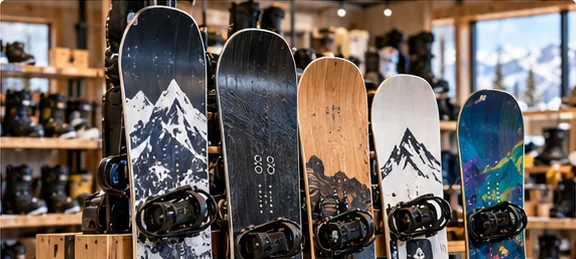
Your weight narrows down which lengths of a model suit you.
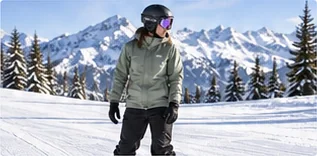
Your boot size decides the board width you need to avoid toe and heel drag.
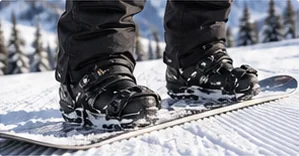
Your level and favorite terrain help you choose within the range that fits.
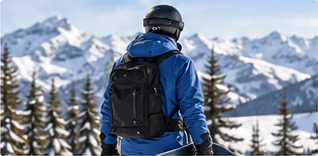
Height gives a ballpark. Weight and boot size decide.
The old rule of thumb says a snowboard stood on its tail should reach somewhere between your chin and your nose. Burton’s sizing advice for parents describes exactly that method and says it “may provide a good ballpark size,” but that Burton’s experts recommend sticking with weight and boot size, for kids and adults alike. So use the chin-to-nose check only as a quick sense-check in a shop, never as the answer.
Why weight? A snowboard is designed to flex under a rider, and how much it flexes depends on the weight pressing on it. That is why manufacturers’ size charts list a recommended rider weight range for each length of a model. Burton’s buying guide explains that a rider heavier than a board’s suggested weight may find it feels softer, and a lighter rider may find it stiffer. Two riders of the same height can need different lengths, and two boards of the same length can ride very differently.
To determine your snowboard size, then, you need three things: your weight in riding clothes, your boot size, and the chart for the board you want. If you fall between two lengths, your ability and riding style (below) help you choose.
Width matters as much as length. The narrowest part of the board, the waist, needs to suit your boot size; Burton’s buying guide calls waist width “the primary indicator” of which boot and binding sizes a board suits. If the board is too narrow, your toes or heels can hang over the edges and drag in the snow when you turn, which can catch and throw you off balance. If it is much too wide, the board can feel slow to tip from edge to edge.
The fit profile at the top of this page brings together the details a size chart asks for: your weight, boot size and sizing system, riding level and preferred terrain, plus the model you are considering. It does not calculate a length. Instead it gives you a checklist to use with that model’s official chart, because recommendations differ between models, even from the same brand.
Your entries stay on your device. We do not store them or send them to analytics.
Each board model has its own size chart, usually on the product page or in a size guide on the manufacturer’s website. Men’s, women’s and kids’ models often have separate charts, so open the one for the exact board. A typical chart lists, for every length:
If your weight sits across two lengths, the manufacturer or a knowledgeable shop can tell you how that particular model rides.
Within the lengths that fit your weight, your riding goals help you choose:
These are tendencies rather than rules, and a board’s shape, profile and flex change how a given length rides. To work out which type of board suits you in the first place, see our board-buying guide. Sizing for children works a little differently; see kids’ snowboard sizing.
If you already own a board and want to figure out its size:
Common questions
Start with your weight and boot size, then open the size chart for the specific model you want. Choose a length whose recommended weight range includes your weight and a width that suits your boots, then use your ability and riding style to decide between lengths.
That old height rule gives a rough ballpark at best. Burton recommends sizing by weight and boot size instead, because a board flexes according to the weight on it. Use the chin-to-nose check only as a quick sense-check.
Many beginners find a length toward the shorter end of their weight range easier to turn. The length should still sit inside the recommended weight range for that model.
You may need a wide board if your boots are large enough to overhang a regular-width board. Check the model’s recommended boot sizes, or its waist width, against your boots.
Because recommendations differ between models. A single formula cannot account for each board’s design, so the reliable answer comes from the official chart for the board you choose.
Related guides
Match board type, profile and flex to your ability and terrain.
Match binding size to your boots, then check board fit and flex.
Measure, size and fit-check snowboard boots before you buy.