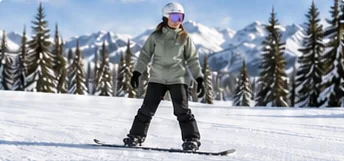
How to snowboard on icy slopes
Stay in control on hard-packed and icy snow with better edge use.
Plan your trip
Read the mountain
There is no fixed number of inches of snow you need to snowboard. The real test is whether the resort has opened the terrain you want to ride, because resorts only open runs once they judge the cover is enough for the ground underneath.
Part of Carving and all-mountain riding
At a glance
Before this guide
The resort’s own report is the best answer to whether there is enough snow.
How much snow do you need to snowboard? There is no reliable single figure in inches, because the depth needed depends on what is underneath. A smooth grassy slope needs far less cover than a rocky one, and machine-made, groomed snow behaves differently from fresh natural snow. Resorts decide when terrain has enough cover to open, and that decision is the one to trust.
Before you go, check the resort’s website or app for:
Stay on open terrain. Closed runs may lack cover, have machinery working on them or hold other hazards. The NSAA’s Your Responsibility Code asks everyone to “Keep off closed trails and out of closed areas.”
If you are planning lessons at a specific resort, its own lessons page is the place to check. For example, Big Bear Mountain Resort, which runs Snow Summit and Bear Mountain in Southern California, describes on its lessons page (checked 23 September 2026) a choice of a group lesson “with others at your ability level” or a private lesson. Dates and options change, so confirm them before booking; our advice on choosing a snowboard lesson can help.
Thin cover hides rocks, stumps and bare patches that can damage boards and cause falls.
Early in the season, after a thaw, or late in spring, cover can be thin even on open runs. Watch for:
Stick to the middle of groomed runs where cover is usually best, and ride at a speed that lets you avoid what you see. If your base or edges take a hit, our base repair guide explains what to do next.
On snowy days, snow builds up on the topsheet and in your bindings. Knock it off before you strap in so your boots sit properly, and clear it from the board before riding a lift if it could fall on people below. Drying the board afterward is covered in our board storage tips.
There is no single cut-off, but official cold warnings and wind chill are the signals to take seriously.
No authority sets one temperature at which snowboarding becomes unsafe for everyone. What matters is the wind chill, how long you are exposed, how well you are dressed and how your body handles cold. The US National Weather Service defines wind chill as “how cold people and animals feel when outside,” based on heat loss from exposed skin caused by wind and cold. Chairlift rides and fast descents add their own wind on top of the forecast.
Useful signals from the NWS, as its pages read when checked 23 September 2026:
Resorts may also slow or close lifts in extreme cold or high wind, so check the resort’s lift status on the day. In practice, we suggest covering every bit of skin with a face covering, goggles and helmet on cold, windy days, taking regular warm-up breaks, checking each other’s faces, and planning shorter sessions, especially with children. Our layering guide covers the clothing.
Spring snow changes through the day, from firm to soft to heavy.
In spring, snow often refreezes overnight and softens as the day warms. Timing your runs makes a big difference.
| Time of day | What the snow is often like | How to ride it |
|---|---|---|
| Early morning | Firm or icy until the sun reaches it | Easier runs, smooth edge changes; see tips for icy mornings |
| Late morning to midday | Softened, often the most enjoyable on sunny slopes | A good time for practicing clean carved turns |
| Afternoon | Heavy, wet slush that grabs the board | Centered, flexed stance and steady speed |
| Late in the day | Shaded slopes refreezing, rutted surfaces | Slow down or call it a day |
Keep your weight centered rather than on the nose, stay flexed so your legs absorb sudden drag, and keep your speed steady so the board does not bog down on flat sections. Expect the board to slow abruptly on wetter patches. Warm snow also affects glide; see our guide on how often to rewax and follow the wax manufacturer’s guidance for warm conditions.
Some venues operate in summer on glaciers or indoor slopes. Operating seasons, hours and access rules vary, so check each venue’s current information directly before you travel.
Changing plans is part of good mountain judgment. Consider a different run, a shorter day or another day altogether when:
Conditions matter even more away from groomed runs. Deep snow brings tree well hazards, covered in our in-bounds powder guide, and terrain outside the resort needs avalanche forecasts and training, as our backcountry orientation explains. If you are learning, ask your instructor or ski school whether the conditions suit a lesson.
Practice goals
Checking a box records your practice. Ask your instructor when you are ready to progress.
Common questions
There is no single figure, because the depth needed depends on what is under the snow and how it is groomed. Resorts open runs when they judge the cover is sufficient, so check the resort’s report and stay on open terrain.
It varies with the ground underneath, and thin cover can hide rocks and stumps. Stay on open, marked terrain and follow the resort’s signs and closures rather than judging depth yourself.
There is no universal limit. Check the local National Weather Service forecast: its extreme cold warnings and cold weather advisories use locally set criteria, and its wind chill chart shows how quickly exposed skin can freeze. Cover all skin, take warm-up breaks and shorten or skip the day when warnings are in effect.
Keep a centered, flexed stance and a steady speed, and expect the board to slow suddenly on wetter patches. Riding earlier in the day or on slopes with less sun can give you firmer snow.
Yes, at some glacier resorts and indoor slopes. Seasons and access vary, so check each venue’s current operating information before planning a trip.
Up next
Stay in control on hard-packed and icy snow with better edge use.
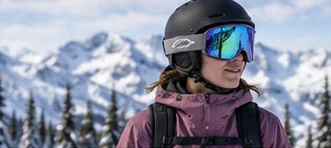
Layer up to stay warm, dry and comfortable all day.
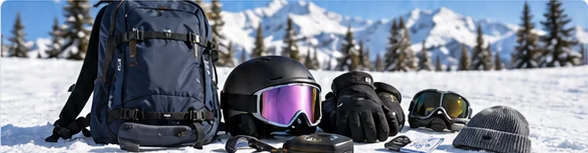
Everything you need to feel prepared for a great first day on snow.