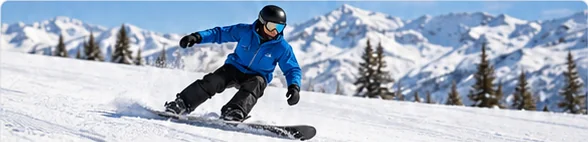
Progressing to steeper terrain
Step up to steeper runs gradually, with speed control on every turn.
Next-level skills
Soft snow, in-bounds
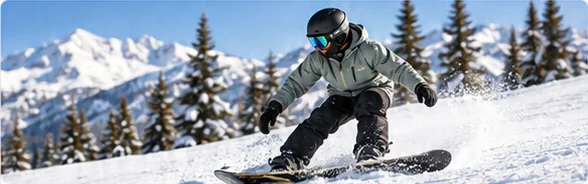
To snowboard in powder, shift your weight slightly toward your back foot so the nose floats, keep a steady speed so the board stays on top of the snow, and make round, flowing turns instead of quick pivots. Start on open, in-bounds terrain with a partner in sight.
Part of Carving and all-mountain riding
At a glance
Before this guide
Powder rewards riders who already have solid control on groomed snow.
Learning how to snowboard in powder is less about new tricks and more about adapting skills you already have. Deep, soft snow hides the surface under your board, slows you down unevenly and makes every fall harder to recover from. That is why the best preparation happens on groomed runs.
Before you head for untracked snow at the side of a run, check that you can:
If any of those feel shaky, spend more time on the edge-control drills in our carving guide first. A lesson on a powder day is also a great investment: an instructor can pick suitable terrain, watch your stance and correct habits that only show up in soft snow.
Your board matters less than your technique, but shape, length and setback all affect how a board floats. Check the manufacturer’s description of your model to see how it is designed to ride in soft snow, and see our board-buying overview for the bigger picture.
Start on open, marked runs where the resort manages the terrain and help is close.
Your first powder turns belong inside the resort boundary, on runs that are open and marked. Resorts close terrain for reasons you may not be able to see, including avalanche control work, hidden obstacles and thin cover. The NSAA’s Your Responsibility Code asks everyone to keep off closed trails and out of closed areas.
Avoid flat or very gentle slopes in deep snow at first. Powder slows you down, and on a low angle you may simply stop and sink. A slope that feels a touch steep on a groomed day can be just right in soft snow, but only move up as your control allows; our notes on stepping up to steeper runs cover how to judge that.
Keep the nose up, stay centered and turn with smooth, rounded movements.
On a groomed run the snow pushes back firmly under your edge. In powder the board sinks and rides on a softer platform, so small changes in balance have a bigger effect.
If too much weight goes onto your front foot, the nose can dive under the snow and stop you suddenly. Many riders shift their weight slightly toward the back foot in deep snow to keep the nose riding up. Do this by moving your hips a little, not by leaning back with your upper body or straightening your front leg. Stay flexed at the ankles, knees and hips.
Speed helps the board rise and float. Ride too slowly and you will sink and struggle to turn. Aim for a steady, controlled pace and use the shape of your turns to manage speed rather than stopping and starting often.
Expect your legs, especially your back leg, to tire more quickly than usual. Take breaks at the side of the run where people above can see you.
Pushing down on soft snow does not work; create a platform first.
Getting up in deep powder is one of the most tiring parts of a soft-snow day. Your hands sink when you push on the snow, and the board may be buried. These steps usually help:
Carry speed into flat sections so you do not stall. If you do get stuck, you may need to unstrap your back foot and walk or skate out. Be aware that stepping off the board in deep snow can drop you much deeper than you expect. For general technique, see our guide to falling safely and standing back up.
Deep, loose snow can trap a rider, so never ride powder alone.
Soft snow cushions falls, but it also creates hazards you do not meet on groomed runs.
Check the resort’s posted warnings on the day, look at how to read the snow report and forecast, and dress for being in snow with our layering guide.
Riding powder inside a resort is not preparation for riding powder outside it. Beyond the boundary, snow is not controlled for avalanches and rescue may be far away. Avalanche.org’s three-part rule is “Get the Forecast, Get the Gear, and Get the Training,” and leaving the resort also requires practice with rescue equipment and experienced partners or a qualified guide.
If you are curious where powder riding can lead, start with our orientation to backcountry riding and the education resources at avalanche.org. Do not use gates or leave the boundary on the strength of reading a web page.
Practice goals
Checking a box records your practice. Ask your instructor when you are ready to progress.
Common questions
Not with your upper body. Shift your weight a little toward your back foot by moving your hips so the nose stays up, but keep your knees and ankles flexed and your shoulders over the board. Leaning back tires your back leg and makes turning harder.
Clear your face first, then get the board downhill of you and across the slope. Pack down a platform with your hands or forearms, push up onto an edge, and point the board slightly downhill to get moving before you sink.
Keep a steady speed, stay centered to slightly back, and make rounder, smoother turns with a gentle up-and-down rhythm. Avoid sharp pivots, which tend to bog the board down in soft snow.
Try to keep your speed up before flat sections so you do not stall. If you do get stuck, you may need to unstrap your back foot and walk or skate out, remembering that stepping off the board can drop you deeper into soft snow.
Trees add the risk of tree wells, where a rider can become trapped in deep, loose snow. The NSAA says to always ride with a partner within viewing distance. Give trees a wide berth and stay on open, in-bounds terrain until you have far more experience.
Up next
Step up to steeper runs gradually, with speed control on every turn.
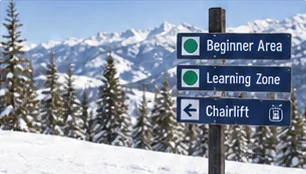
Read snow reports, cover, cold and visibility before you ride.
Understand the training, partners and planning backcountry requires.