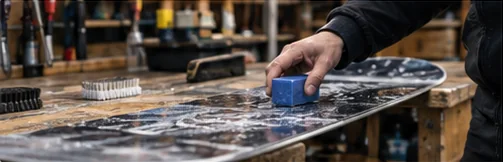
How to wax a snowboard
Hot wax your board at home: prep, iron, cool, scrape and brush.
Board care
Clean, dry and waxed
To store a snowboard properly, put it away clean, completely dry and coated in unscraped wax, somewhere cool, dry and out of direct sunlight. Here is the full off-season routine, plus how to store it between trips.
Part of Snowboard maintenance and repairs
Step by step overview
Wipe down the board and bindings and let everything dry fully.
Deal with rust, burrs and base damage before it sits for months.
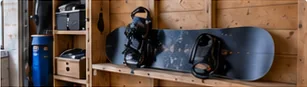
Apply a generous coat of wax and leave it unscraped.
Keep it somewhere cool, dry and out of direct sunlight.
At a glance
Never put a board away wet.
The first step in storing a snowboard is getting it clean and completely dry. Burton’s advice is simple: wipe the board and bindings with warm water and a little mild cleaner like dish soap, then go over everything again with a dry rag. Removing the bindings first makes it easier to reach everything.
Burton’s base-maintenance guide warns that a wet board left in a bag or damp place for a long time will develop rusty edges, so take your time with this step.
The end of the season is a good time to fix things, because the board will not be needed for a while. Look for:
If the board needs a full service, the off-season is often a quieter time to book one with a shop. A pre-storage tune fits naturally into your yearly board-care routine.
A thick coat, left on until next season.
Burton explains that the base material of a snowboard is porous and will dry out if left unattended for months, so it recommends a final hot wax before storage with the scraping step skipped. Rome gives the same advice: a thick layer of wax at the end of the season, not scraped off until winter comes back.
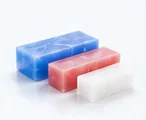
Which wax? PSIA-AASI recommends a mid-range wax as the right hardness for storage waxing: one that is too soft deteriorates over summer, while one that is too hard does not seal out air and dust as well.
Many riders take the bindings off for storage. Burton says this makes cleaning easier, gives you a chance to inspect for damage and relieves tension on the mounting screws. PSIA-AASI adds that removing them helps reduce protrusions forming on the base from screw pressure over the off-season. Burton also suggests marking your binding settings with a pen so you remember them, and taping loose screws to the binding so they do not get lost.
The rest of your snowboard gear needs its own care before it goes away. Dry boots and liners fully (see drying and cleaning boots) and wash outerwear following its care label (see washing jackets and pants).
Burton recommends keeping boards out of direct sunlight in a cool, dry place, and warns against attics hotter than 85°F (30°C), damp basements and spots with long direct sun exposure (checked 23 September 2026). Other tips:
A garage is fine if it stays reasonably cool and dry. Burton’s warnings about heat, damp and direct sun apply here too, so avoid a garage that bakes in summer or gets condensation. If the garage is your only option:
Between trips during the season, the rules are simpler: dry the board fully at room temperature first, then keep it somewhere dry and out of the way. If you store it somewhere shared, see locking up your board.
Common questions
Clean and dry it, fix any damage, apply a generous coat of wax that you leave unscraped, and store it somewhere cool, dry and out of direct sunlight, ideally in a board bag and off the ground.
Many riders do. Burton says it relieves tension on the mounting screws and makes cleaning and inspection easier. Mark or photograph your settings so you can remount them the same way using your binding manual.
Scrape it off with a plastic scraper from nose to tail, clear the edges, then brush the base. You can then apply a fresh wax suited to the conditions.
Yes, if the garage stays cool and dry. Wax the board, bag it, keep it off the floor and away from heat, sun and chemicals, and check it for rust once or twice over summer. Burton warns against damp basements and very hot attics, and the same logic applies to a garage.
PSIA-AASI recommends a mid-range wax as the right hardness for storage: too soft and it deteriorates over summer, too hard and it does not seal out air and dust as well.
More board care
Hot wax your board at home: prep, iron, cool, scrape and brush.
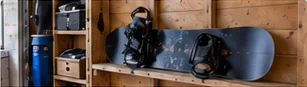
Display or store your board on a wall, safely and securely.
Wash the base, topsheet and edges and lift out old wax.