How to find snowboard lessons
Find a good place to learn nearby and compare lessons before booking.
Beginner skills
Friends and family
The best way to teach someone to snowboard is usually to book them a lesson with a qualified instructor and then support them around it: prepare their gear, keep the pace gentle and reinforce what the instructor taught. Here is what a friend can safely do, and what to leave to a pro.
At a glance
Knowing how to ride is not the same as knowing how to teach.
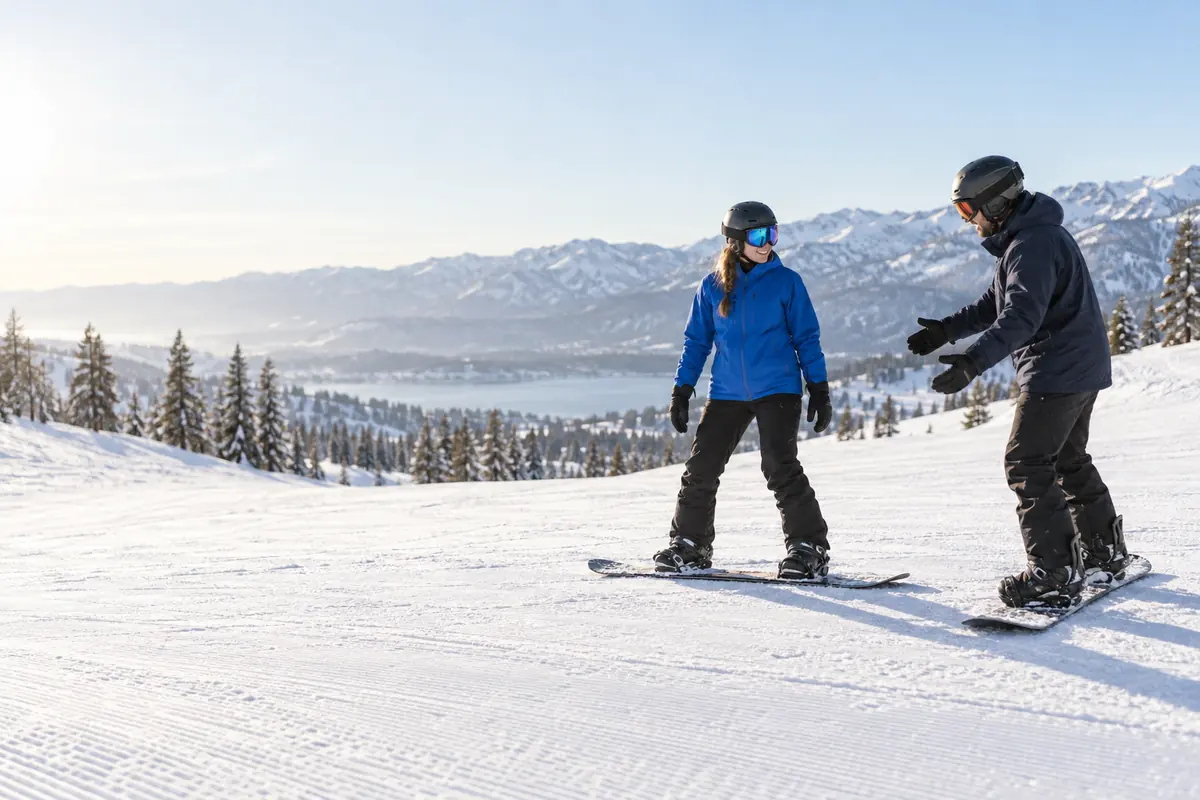
If you want to know how to teach someone to snowboard, start with this: your most useful job is usually to get them a proper lesson and then be a patient riding partner. Informal teaching can work for small things, but it has real limits.
Experienced riders often struggle to explain movements they no longer think about. It’s easy to pick terrain that feels easy to you but is too steep for a beginner, to give five tips at once, or to miss the stance problem behind every fall. Frustration also lands differently coming from a partner or friend.
Trained instructors break skills down, choose suitable terrain and spot what the body is doing. PSIA-AASI’s beginner’s guide video series covers first-day basics, but one of its instructors notes the videos “do not replace an on-snow lesson.”
Booking a lesson is the most useful thing you can do.
During the lesson, go ride your own runs. Hovering on the sidelines or adding your own advice can confuse things. Meet up afterward and ask what they learned.
Your experience is most useful before they reach the snow.
Keep to the basics, on the gentlest terrain, in the usual order.
Sometimes a lesson isn’t possible and you end up teaching a beginner to snowboard yourself. If so, stay on a quiet, gentle beginner slope with a flat run-out and follow the order most beginner guides use, one step at a time:
Don’t hold their hands and pull them downhill, don’t take them onto a chairlift before they can stop, and never move to steeper terrain because they’re “nearly there”. If they’re stuck on the same step, that’s a clear sign to book an instructor.
Patience matters more than technical tips.
Progress varies a lot between people. Share our guide to what progress to expect in the first days so neither of you expects too much too soon.
Possible, but slower, and worth at least one lesson.
Some people do teach themselves how to snowboard, but it usually takes longer, involves more falls and can build habits that are hard to undo later. If you go it alone, stick to the gentlest terrain, learn to stop before anything else, and consider at least one lesson to check your basics.
One lesson rarely covers everything either. Many beginners benefit from a short series, building from stopping to linked turns. And if helping friends has you thinking about teaching properly, our guide to qualifying as an instructor explains the certification routes. Parents helping younger riders should read our separate advice on children’s lessons and gear.
Practice goals
Checking a box records your practice. Leave assessment of progress to their instructor.
Common questions
It’s usually better to book a lesson with a qualified instructor and support them around it. Instructors are trained to break skills down and choose suitable terrain, and it keeps the day more relaxed for both of you.
Some people do, but it’s usually slower, involves more falls and can build habits that are hard to undo. If you learn alone, use the gentlest terrain, learn to stop first and consider at least one lesson.
Keep to a gentle beginner slope and go in order: strapping in and skating, falling and getting up, sideslipping and stopping on each edge, then single turns. If they get stuck on a step, book a qualified instructor.
Yes, if they want to, on terrain they can manage in control. Let them ride ahead where you can see them, and repeat their instructor’s cues rather than adding new ones.
Up next
Find a good place to learn nearby and compare lessons before booking.
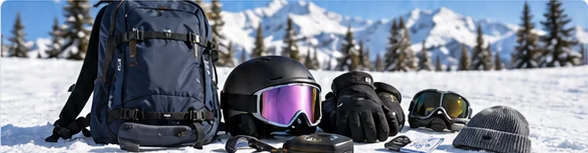
Everything you need to feel prepared for a great first day on snow.
Help children learn with gear that fits, short sessions and lessons.