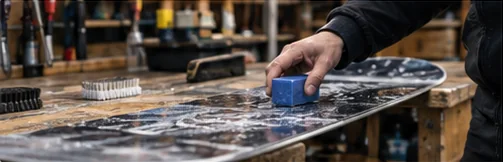
How to wax a snowboard
Hot wax your board at home: prep, iron, cool, scrape and brush.
Board care
Read the base, not the calendar
Burton’s rule of thumb is to wax your snowboard after every three riding days, but the real answer depends on the snow and how hard you ride. Here is how to tell if your snowboard needs wax, so you can wax when the base asks for it.
Part of Snowboard maintenance and repairs
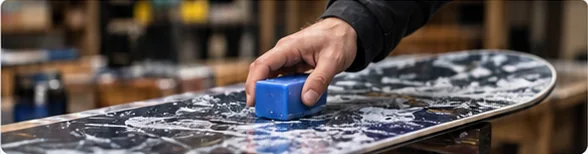
Step by step overview
Check for dry, whitish or cloudy patches, especially near the edges and at the nose and tail.
Count the days since you last waxed and consider the snow you rode on.
A board that feels slow, sticky or grabby on flats is often asking for wax.
Wax it yourself, use a quick rub-on coat, or take it to a shop for a full tune.
At a glance
Start from a rule of thumb, then adjust to what you see.
For most riders, a hot wax every few riding days is a sensible baseline. Burton’s base-maintenance guide says it generally recommends waxing “after every three riding days, but this ultimately depends on how hard you ride,” and that if that sounds like too often, you can wax when you notice your glide slowing down or the base turning cloudy. Its waxing guide adds a minimum of a tune at the beginning and end of each season.
Treat any number as a starting point rather than a rule. Someone riding icy hardpack every weekend will get through wax much faster than someone doing a week of soft powder once a year. The rest of this page explains how to read the board so you know when your own snowboard is due.
| Your situation | A reasonable approach |
|---|---|
| Riding most weekends in a season | Check the base after each trip; expect to wax every few riding days. |
| One or two trips a year | Wax before each trip and again before storage. |
| Icy, man-made or dirty spring snow | Check more often; wax wears off faster. |
| End of the season | Always wax, and leave it unscraped for storage. |
Your board shows you when it is dry, so learn to read it.
The most reliable way to know when to wax your snowboard is to look at the base. Put the board base-up in good light and check it from nose to tail.
White patches are not always just dryness. RaceWax says white areas “are most often a dry base that is in need of wax,” but white spots that do not absorb wax indicate base burn (oxidation). If a patch stays white after waxing, ask a technician to look at it.
A freshly waxed base looks uniform and slightly glossy from edge to edge, with no chalky patches. Compare the areas near the edges and contact points with the middle of the base: if they look paler or cloudier, the wax there has worn off. Looks are not an exact test, so if you are unsure, wax it; an extra coat does no harm.
For a new board, most leave the factory or shop with some wax on the base, but how much varies. Rome, for example, says all its boards come factory waxed. Check the paperwork, ask the shop, and if in doubt give it a coat before your first day using our step-by-step hot-wax guide.
Two people with the same board can need very different waxing routines.
Waxing is the most frequent job in a wider routine; for how it fits with edge work and inspections, see our complete board tuning routine.
A few minutes after each trip saves problems later.
When you get home, wipe the board down, dry the base and edges, and take a quick look before you put it away. This is the moment to decide whether it needs wax before next time.
Short of time or tools? A rub-on or liquid wax can top up the base between hot waxes. It is quick, but it does not last as long as a hot wax.
The end of the season is one time to wax regardless of how the base looks. Burton recommends a final hot wax before summer storage and skipping the scraping step, so there is plenty of wax to protect the base and stop it drying out; Rome gives the same advice. The full routine, including where to keep the board, is in our off-season storage guide.
Waxing at home covers most day-to-day needs, but some signs mean a shop tune is the better choice:
Shops offer different levels of service, from a quick wax to a full tune with base grind and edge work, and what is included varies. If you plan to have the shop do every wax, shop waxing prices will help you budget for the season.
Common questions
Burton generally recommends waxing after every three riding days, adjusted for how hard you ride. In practice, wax when the base looks dry or cloudy, when the board feels slow, before storing it for the summer, and whenever you cannot remember the last wax.
Look at the base in good light. Cloudy or whitish patches, especially along the edges and near the nose and tail, usually mean the wax has worn off. A board that feels slow or sticky on flat sections is another clue.
The same signs apply whether you wax at home or at a shop. A sensible plan is a shop wax before the season, every few riding days during heavy use, and before storage, with a rub-on top-up in between if you like.
Very. Burton says waxing increases glide and protects the base, helping extend the board’s usable life. A dry base feels slower and is more prone to damage over time.
It is a handy quick top-up between hot waxes or on the mountain, but it wears off sooner. Hot waxing gives the most thorough, longest-lasting result.
More board care
Hot wax your board at home: prep, iron, cool, scrape and brush.
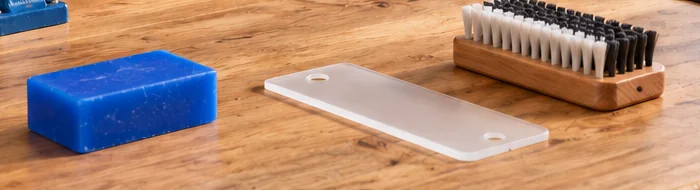
Use rub-on or liquid wax for a quick, heat-free top-up.
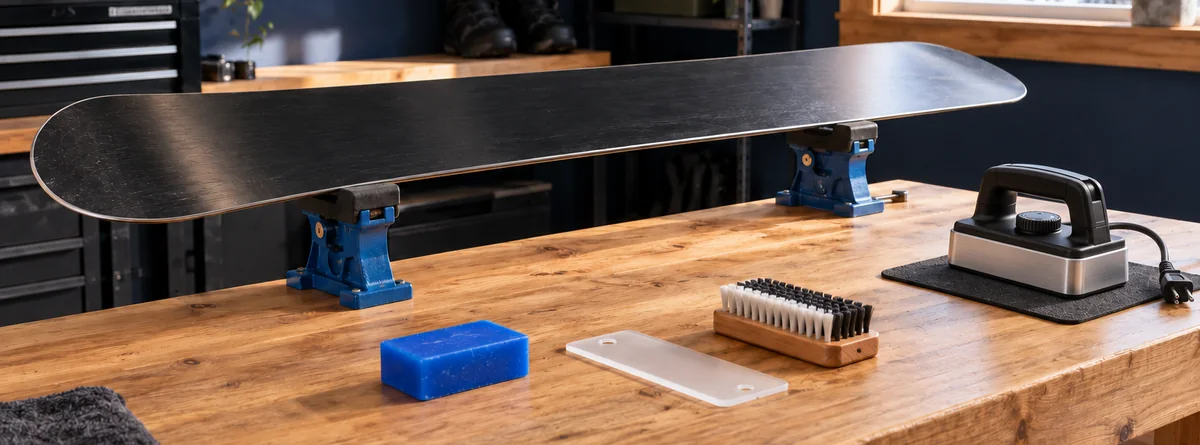
A simple routine to clean, check, wax and tune your snowboard.